Fuel Types and Running Costs
Range Cooker Fuel Types: 6 Options Costed per kWh
By the Hill & May team
Updated 2026
Range cooker fuel types come down to six real choices in a British kitchen: mains gas, LPG, electric (ceramic or induction), dual fuel, oil and wood. The right one is rarely the cheapest fuel on paper. It is the one your house can actually supply, fitted by the right tradesperson, at a running cost you can live with. This page puts all six side by side with current prices, then tells you which of our more detailed guides to read next.
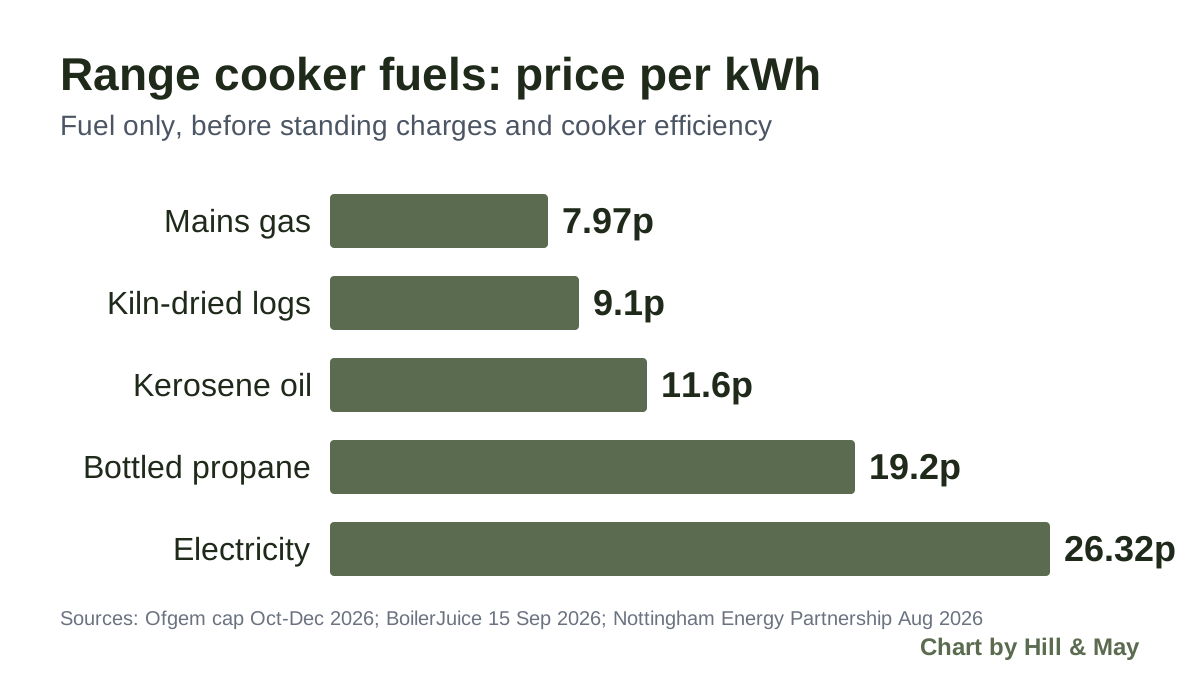
The price of each fuel, per kWh
Different fuels are sold in kWh, litres and kilograms, so the only fair comparison is the price per kWh of energy. These are the prices of the fuel itself, before any standing charge and before the cooker’s own efficiency:
| Fuel | Price as sold | Price per kWh |
|---|---|---|
| Mains gas | 7.97p per kWh | 7.97p |
| Kiln-dried logs | 37.26p per kg | 9.1p |
| Kerosene (heating oil) | 113.70p per litre | 11.6p |
| Bottled propane (LPG) | 127.16p per litre | 19.2p |
| Electricity | 26.32p per kWh | 26.32p |
Gas and electricity are the national average direct debit rates under the Ofgem price cap for 1 October to 31 December 2026. Kerosene is BoilerJuice’s UK average for 15 September 2026, including VAT. Logs and propane are the August 2026 averages from the Nottingham Energy Partnership’s energy cost comparison, and all three are converted using that table’s energy content figures: 9.78 kWh per litre of kerosene, 6.64 kWh per litre of propane and 4.09 kWh per kg of dry logs.
Two warnings before anyone reads that table as a verdict. Oil and bottled gas prices move weekly and vary sharply by region and order size. And the per-kWh price is only half the running cost: an induction hob puts far more of its energy into the pan than a gas burner does, and an always-hot cast iron range burns fuel all day whether you cook or not. Our gas vs electric vs induction cost comparison works the efficiency through for a real week of cooking.
1. Mains gas
An all-gas range cooker has gas burners on the hob and gas-fired ovens, although on Rangemaster’s 90cm and 100cm models the tall side oven stays electric even on gas versions, so you still need a power supply. The Rangemaster Classic 90, for example, is sold in all-natural-gas and dual fuel versions.
What it needs: a mains gas connection and a Gas Safe registered engineer to fit it. That is a legal requirement for any gas appliance, not a recommendation.
Who it suits: cooks who want visible flame control and already have gas in the kitchen. Gas ovens run a little moister than fan electric ovens, which some bakers dislike and roasters like.
The catch: gas has the lowest unit price, but it carries a standing charge of 29.68p a day under the October 2026 cap. If the cooker is your only gas appliance, that fixed charge can cost more than the gas you burn. Our gas cooker buying guide covers the ignition and safety features to check.
2. LPG (bottled or bulk gas)
LPG is the answer for rural homes without mains gas. It burns in almost exactly the same way, and most gas range cookers can be converted by swapping the burner jets.
What it needs: an LPG-convertible model (confirm the exact model number before buying, as a few convert the hob but not the oven), a conversion by a Gas Safe engineer, and bottles or a bulk tank with a supplier.
Who it suits: off-grid kitchens where the cook wants flame. At about 19p per kWh, propane costs more than twice as much as mains gas for the same heat, so many off-grid owners choose dual fuel and keep LPG for the hob only. The LPG cooker guide explains propane versus butane and how to size the bottles.
3. Electric: ceramic or induction
An all-electric range cooker has electric ovens and either a ceramic (radiant) hob or an induction hob. Induction heats the pan directly through a magnetic field, so it is fast, easy to clean and loses little heat into the room.
What it needs: a dedicated cooker circuit, and here is the part people skip. A big electric range draws far more than a 60cm cooker. Rangemaster’s guidance for its ceramic and induction models is that 6mm cable on a 32 amp breaker may be suitable, with 10mm cable on a 45 amp breaker recommended. Pans must be magnetic for induction. Our induction range cooker guide and cooker cable size calculator go through the checks.
Who it suits: homes with no gas, new builds, and anyone planning to drop their gas supply altogether. Electricity is the most expensive fuel per kWh at 26.32p, but induction’s efficiency narrows the gap, and cooking on a cheap overnight tariff narrows it further.
4. Dual fuel
Dual fuel means a gas hob with electric ovens. It is the most popular configuration for British range cookers because it pairs the flame control people like on the hob with the even, dry heat of fan ovens.
What it needs: both a gas supply (mains or LPG) and a suitable electric circuit, which means both a Gas Safe engineer and an electrician. A 110cm dual fuel model can draw over 11kW; our comparison of range cookers and built-in ovens has the wiring figures.
Who it suits: most households with gas who want a traditional range. If you are choosing between dual fuel and induction, the dual fuel range cooker guide sets out the trade-off.
5. Oil
Oil-fired range cookers are the traditional cast iron heat-storage type, and they are still made. AGA Living’s Rayburn 300 Series is sold in oil only: the Rayburn 308K is heated by kerosene and provides cooking and hot water, and the brand notes HVO (hydrotreated vegetable oil) as a lower-carbon alternative fuel. The larger Rayburn 600 Series also runs on oil and adds central heating.
What it needs: an oil tank, a flue, and an OFTEC-registered technician to install and service it. Budget for an annual service.
Who it suits: off-grid farmhouses where the range also heats the water, or the whole house. As a cooker alone, a cast iron range that stays hot all day is an expensive way to boil an egg. The Aga running costs guide shows what always-on models burn in a year, and the Aga range cooker guide covers AGA’s controllable electric models that have largely replaced its gas and oil cookers.
6. Wood and solid fuel
A wood-fired range cooker is a stove with an oven and hotplate built in. The ESSE Ironheart is a well-known example: ESSE describes a firebox that takes 500mm logs, an oven of almost 50 litres heated by the fire’s hot gases, a hotplate for up to six pans, and up to 7.6kW of heat into the room.
What it needs: a chimney or a new flue system installed to Building Regulations, usually by a HETAS-registered installer, plus a dry log store. In a Smoke Control Area in England you may only burn wood on a DEFRA-exempt appliance, so check the model’s status for your address.
Who it suits: rural homes that already heat with logs and want the cooker to warm the kitchen too. Logs are cheap per kWh if they are properly dry, but you tend the fire, carry the fuel and clean the flue.
Which fuel should you choose?
- You have mains gas: dual fuel for most people, all-gas if you bake little and love flame. Weigh up the standing charge if the cooker is your only gas appliance.
- No gas, good electrics: induction. It is the cheapest electric option to run and the easiest to live with.
- No gas, want flame: LPG hob with electric ovens, fitted by a Gas Safe engineer.
- Off-grid and the cooker must heat water or rooms: oil or wood, sized with an installer, not from a brochure.
- Not sure what size fits: start with what size range cooker you need, then read the full range cooker buying guide.
Frequently asked questions
What are the main range cooker fuel types? There are six in the UK: mains gas, LPG, electric with a ceramic or induction hob, dual fuel (gas hob and electric ovens), oil, and wood or solid fuel. Dual fuel is the most common choice for a traditional range.
Which range cooker fuel is cheapest to run? Mains gas has the lowest unit price at 7.97p per kWh under the October 2026 price cap, against 26.32p for electricity. Induction’s much higher efficiency narrows that gap, and gas’s daily standing charge can wipe out the saving if the cooker is your only gas appliance.
Can I convert a gas range cooker to LPG? Most gas and dual fuel range cookers can be converted with an LPG jet kit, but check the exact model first, as some convert only the hob. The conversion must be done by a Gas Safe registered engineer.
Do you need a special electric supply for an electric range cooker? Yes. A range cooker needs its own cooker circuit. Rangemaster says 6mm cable on a 32 amp breaker may suit its ceramic and induction models, but recommends 10mm cable on a 45 amp breaker. An electrician should confirm it for your house.
Are oil-fired range cookers still sold? Yes. The Rayburn 300 Series is oil-only, with the 308K providing cooking and hot water on kerosene, and the Rayburn 600 Series adds central heating. They need an oil tank, a flue and an OFTEC technician for servicing.
Can I have a wood-burning range cooker in a smoke control area? Only if the appliance is exempt for burning wood in a Smoke Control Area, so check the specific model against DEFRA’s exempt appliance list and use dry, approved fuel. It also needs a flue installed to Building Regulations.