Buying Guides
AGA Range Cooker: Everything to Know Before You Buy

By the Hill & May team
Updated 2026
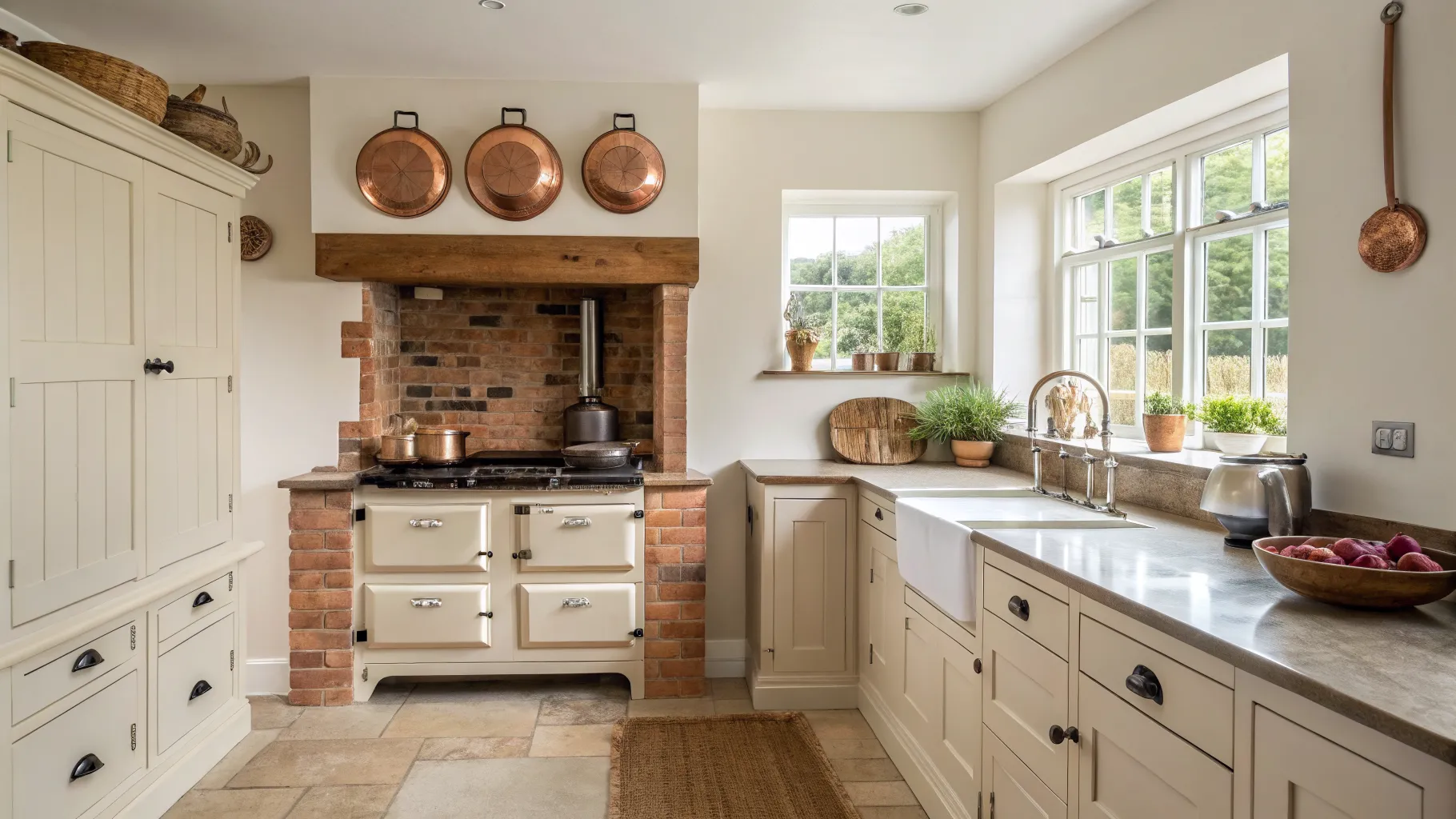
An AGA range cooker is as much a piece of the British country kitchen as it is an appliance. It heats the room, it becomes the spot everyone gravitates to, and it cooks in a way that turns roasts and slow braises into something the oven-and-hob crowd rarely match. It is also a big commitment in price, space and running cost, so it pays to understand what you are buying before the order goes in. This guide walks through the current AGA models, how they run, the sizes to plan for, and the questions worth asking first.
What makes an AGA different
A traditional AGA range cooker works on heat storage. Instead of firing burners on demand, it holds a large mass of cast iron at a steady heat, so the ovens and hotplates are always ready. That is why cooks talk about the AGA “way” of working: you move food between ovens of different temperatures rather than dialling a thermostat up and down.
Modern AGAs give you far more control than the always-on originals. The current cast-iron range spans electric models you can switch on and off zone by zone, right through to hybrids that pair heat-storage ovens with a conventional induction hob. So the romance of a proper cast-iron AGA no longer has to mean a cooker that runs 24 hours a day.
The current AGA models
AGA’s cast-iron heat-storage range now centres on two series, plus the smaller conventional cookers the brand also sells.
- eR7 Series. The closest to the classic three-oven AGA, but fully controllable. It keeps the cast-iron heat-storage roasting, baking and simmering ovens, and adds digital control so each oven and hotplate can be run on its own. You can leave it on around the clock or programme it down overnight and while you are out. The ovens carry an Altrashell coating that seals the cast iron and makes cleaning easier.
- eR3 Series. A more energy-conscious hybrid. It has two cast-iron heat-storage ovens, one for roasting or baking and one for simmering, paired with a modern two or three-zone induction hob. That mix lets you keep the stored-heat cooking for the things it does best while using the induction hob for quick, on-demand jobs.
There is also the smaller AGA 60, which looks like a compact range cooker and suits kitchens without the space or budget for a full cast-iron model. If you are weighing AGA against the other big name in ranges, our AGA vs Rangemaster comparison covers how they differ in cooking, cost and character.
Fuel and running costs
Most AGAs sold today are electric, which suits homes on and off the gas grid and removes the flue and fuel-delivery issues of older oil and gas models. The trade-off is that a heat-storage cooker uses energy to stay warm even when you are not actively cooking, so running cost depends heavily on whether you leave it on continuously or use the programmable controls.
This is the single biggest thing buyers underestimate. A controllable electric AGA left on a sensible schedule costs far less to run than a traditional always-on model, but it is still a meaningful annual figure. We break the real numbers down in our AGA running costs guide, which is worth reading before you commit, because the running cost over a decade can rival the purchase price.
Sizes, weight and installation
An AGA is heavy. A full cast-iron model weighs several hundred kilograms, so the floor needs to take the load, and delivery and installation are specialist jobs, not a two-person lift. Plan the space early: you need width for the cooker itself, clearance to surrounding units and worktops, and access for an installer to get it into position.
Because the cooker radiates heat, think about where it sits in the room and how the rest of the kitchen works around it. Our wider range cooker buying guide covers clearances, ventilation and layout in more detail, and most of it applies to an AGA too.
Living with an AGA day to day
Cooking on an AGA is a habit you learn rather than a set of dials you master. The hotplates work by contact heat, so you use the boiling and simmering plates for hobs work, and you need a flat-bottomed AGA kettle and heavy, flat-based pans that sit squarely on the plate for good contact. Baking, roasting and slow cooking move to the different ovens by temperature.
Many owners say the learning curve takes a few weeks, after which they cook more by feel than by timer. The payoff is bread, roasts and casseroles that benefit from the steady, enveloping heat, plus a warm kitchen that draws the household in.
Is an AGA the right buy for you?
An AGA rewards people who cook often, value the warmth and character, and will use it enough to justify the cost. It is a weaker fit if you cook rarely, want precise on-demand temperature control for everything, or are watching every unit of energy. If you love the idea but want more everyday flexibility, the eR3’s induction hob or a conventional range cooker may serve you better. Our roundup of the best range cookers for 2026 shows the alternatives across every budget.
Frequently asked questions
How much does an AGA range cooker cost to run? It depends on the model and how you use it. A controllable electric AGA run on a programmed schedule costs far less than a traditional always-on model, but it is still a notable annual cost because heat-storage cookers use energy to stay warm. See our AGA running costs guide for current figures.
Can you turn a modern AGA range cooker off? Yes. The current eR7 and eR3 series are fully controllable, so you can switch ovens and hotplates on or off individually and programme the cooker down overnight or while you are away. This is the main change from the older always-on AGAs.
Do you need a special kettle and pans for an AGA? The hotplates cook by contact, so you need a flat-bottomed AGA kettle and heavy, flat-based pans that sit flush on the plate. Warped or thin pans make poor contact and cook unevenly, which is why AGA-specific cookware exists.
Is an AGA hard to cook on? There is a learning curve of a few weeks because you cook by moving food between ovens of different temperatures rather than adjusting a thermostat. Most owners find it becomes second nature and prefer the results for roasting, baking and slow cooking.
What size AGA do I need and will my floor take it? A full cast-iron AGA is very heavy and needs a floor that can carry several hundred kilograms, plus width for the cooker and clearance to surrounding units. Measure early and have an installer confirm the floor and access before ordering.
Is a gas or electric AGA better? Most AGAs sold now are electric, which avoids flues and fuel deliveries and suits homes off the gas grid. Electric controllable models also let you manage running costs more easily than older oil or gas heat-storage cookers.
Where to go next
Read the AGA running costs guide for the real yearly figures, then compare against the field in our best range cookers 2026 roundup. For the full model line-up and technical detail, AGA’s own product pages list current specifications.