Buying Guides
LPG Cooker Guide: Best Gas Cookers for Off-Grid Rural Homes

By the Hill & May team
Updated 2026
An LPG cooker is what you buy when the mains gas main does not reach your house, which in Britain means roughly one home in seven. The good news is that this is a solved problem rather than a compromise: bottled gas gives you the same instant, controllable flame as mains gas, and most gas cookers sold in the UK will run on it. The catch is that almost nobody sells you an “LPG cooker” as such. You buy an ordinary gas cooker and have it converted, and the details of that conversion are where rural buyers get caught out.
This guide covers the part the retailer usually skips: which gas you actually want, why the conversion is not optional or DIY, the specific Gas Safe check that most people get wrong, and how to size the bottles so you are not swapping them mid-roast.
What LPG actually is
LPG stands for liquefied petroleum gas, and in Britain that means one of two gases: propane or butane. They are not interchangeable, and choosing between them is the first real decision.
The deciding factor is the boiling point. Calor gives propane a boiling point of -42°C and butane -2°C, which sounds academic until you remember where the bottle lives. LPG only burns as a vapour, so the liquid in the bottle has to boil to feed the cooker. A butane bottle sitting outside in a British winter will stop doing that on a cold morning: the pressure sags and the flame drops away or dies. A propane bottle carries on working in weather that no British winter will produce.
Because bottles supplying a house cooker are stored outdoors, the answer for a rural kitchen is almost always propane. Calor’s own guidance is that propane is ideal for outdoor use while butane is better suited to indoor use, and butane’s indoor niche is portable heaters and camping, not a permanently plumbed cooker.
The two gases also run at different pressures, which is why the regulator is not a generic part. Propane regulators are preset to 37 mbar and butane regulators to 28-30 mbar. Fitting the wrong one is not a small error.
The conversion, and why it is normal
Here is the thing that confuses first-time buyers. Very few cookers are built as LPG-only. What you are looking for is a cooker described as LPG convertible, which covers most freestanding gas cookers and the great majority of gas and dual-fuel range cookers sold here.
LPG is delivered at higher pressure than natural gas and packs more energy per unit of volume, so the burners need smaller holes. The conversion is essentially a set of replacement injectors, or jets, sometimes with a different regulator and an adjustment to the burner settings. It is a modest, well-understood job.
It is often free. Leisure, for example, will supply the parts at no cost: its support page confirms that new jets for LPG gas can be requested free of charge. Rangemaster, Flavel and most other major brands sell or supply an LPG injector kit for their models. What you pay for is the fitting, not the parts.
Two warnings. First, check the specific model is convertible before you buy, not after, because a minority are not, and some models convert the hob but not the oven. Second, buying a cooker second hand that has already been converted does not mean it is set up correctly for your supply. It still needs checking.
The Gas Safe detail almost everyone gets wrong
This is the most important paragraph in this guide.
Gas work in the UK must be done by a Gas Safe registered engineer, and it is illegal for anyone else to do it. Most people know that. What far fewer people know is that being Gas Safe registered is not, by itself, enough for LPG work.
A Gas Safe ID card lists the specific categories an engineer is qualified for, and those categories cover both the gas type and the appliance type. LPG is a separate competence from natural gas. An engineer can be entirely legitimate, fully registered, and still not be qualified to touch your LPG cooker, and an LPG-only engineer cannot work on mains natural gas either. Work outside the categories printed on that card is illegal gas work even though the engineer is on the register.
So the check is not “are you Gas Safe registered”. The check is: turn the card over and look for LPG alongside the appliance type. You can verify any engineer’s registration and categories on the Gas Safe Register. Ask before booking, because a wasted call-out is the least bad outcome of getting this wrong.
Sizing the bottles
A cooker is a light gas user compared with heating, so this is easier than people fear, but running out mid-Sunday-lunch is an avoidable annoyance.
Calor propane runs from small 3.9kg and 6kg bottles up to 19kg and 47kg. For a cooker alone, a 47kg bottle is overkill and a 6kg bottle is a nuisance, so most rural kitchens sit on 19kg propane. Cooking for a family typically runs a bottle for months rather than weeks, though a range cooker with a big oven and several burners will get through it faster.
The upgrade worth paying for is an automatic changeover regulator feeding two bottles. When the first empties, it switches to the second without interrupting the flame, and an indicator tells you to swap the empty one at your convenience. It costs more up front and removes the entire category of problem where the gas dies halfway through cooking. If you are having an engineer out anyway, fit it then.
Bottles must be stored outside, upright, on a firm level base, and away from drains and building openings, because LPG is heavier than air and pools in low spaces rather than dispersing upwards the way natural gas does. Your installer will site them properly, and this is a good reason not to improvise the location yourself.
What to buy
The practical shortlist for an off-grid kitchen is the same as for any gas kitchen, with one filter applied: confirm LPG convertibility on the exact model number.
- Freestanding gas cookers at 50cm and 60cm are the budget-friendly route, and most are convertible. Our gas cooker buying guide covers sizes, single versus double ovens and the features worth having.
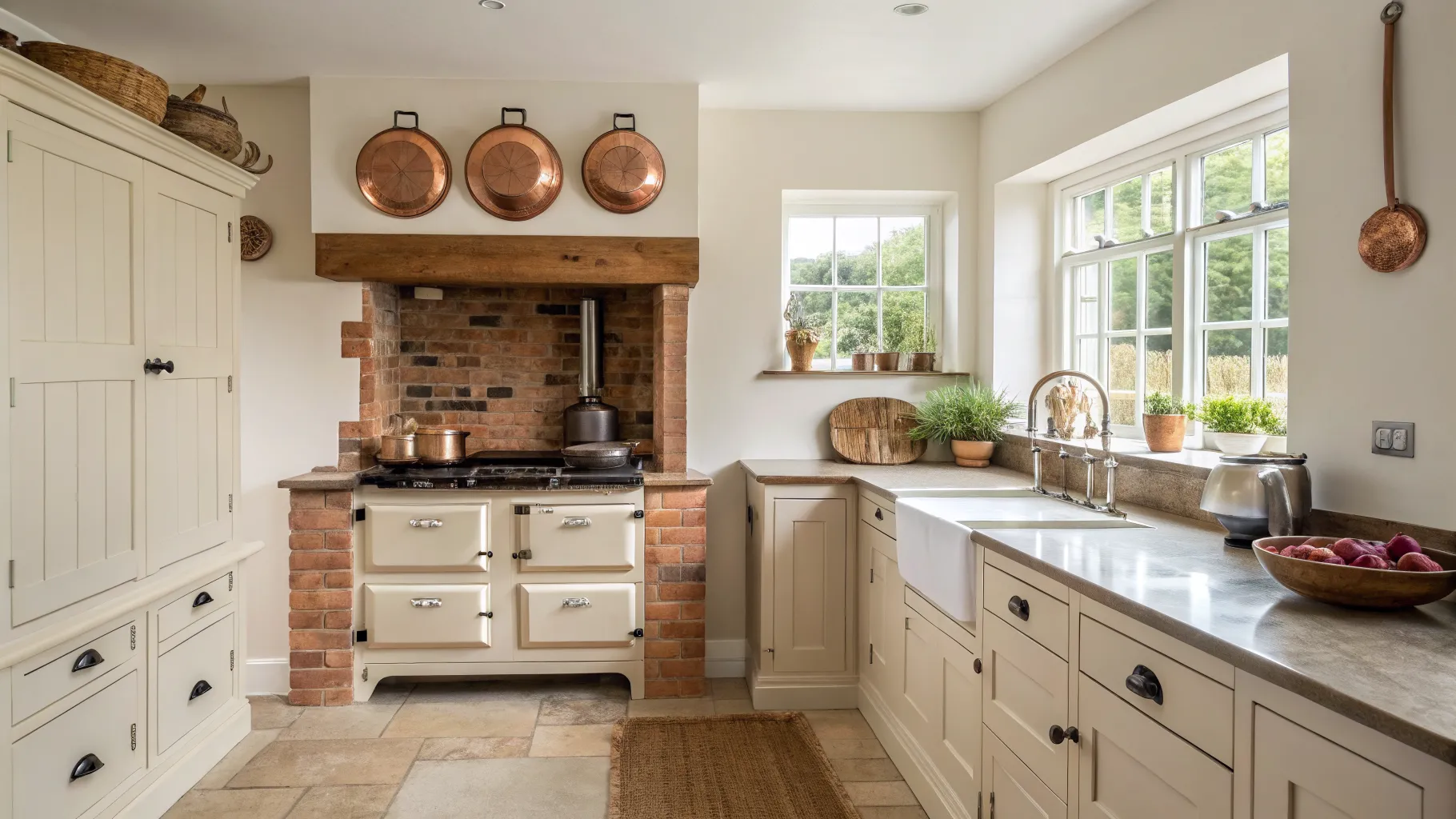
- Gas range cookers at 90cm and 110cm are the country-kitchen answer, and brands including Rangemaster, Leisure, Smeg and Stoves all offer LPG-convertible models. The range cooker buying guide works through what fits.
- Dual fuel range cookers deserve a serious look here. You get an LPG hob with electric ovens, which sidesteps the debate about oven performance on bottled gas and cuts your gas consumption sharply, so bottles last much longer. In a house that already has electricity but no mains gas, this is frequently the sensible answer rather than the compromise it sounds like.
Check price on the retailer’s site for current models, and get the conversion quoted at the same time so the total lands where you expect.
Frequently asked questions
Can any gas cooker run on LPG? Most, but not all. You need a model described as LPG convertible, which covers the majority of freestanding gas cookers and gas range cookers sold in the UK. Check the exact model before buying, as a few are not convertible and some convert the hob but not the oven.
Should I use propane or butane for a cooker? Propane, in nearly every case. Propane boils at -42°C so it keeps working in cold weather, while butane’s -2°C boiling point means an outdoor bottle can stop supplying gas on a cold morning. Since cooker bottles are stored outside, propane is the correct choice.
Can I convert a cooker to LPG myself? No. The conversion is gas work, so it is illegal for anyone who is not appropriately registered. The parts are often free from the manufacturer, but they must be fitted by a Gas Safe engineer who holds LPG on their ID card categories.
How do I know my engineer can work on LPG? Check the back of their Gas Safe ID card. It lists the categories they are qualified for, and LPG is separate from natural gas. Being Gas Safe registered is not enough on its own, and you can verify the registration and categories on the Gas Safe Register website.
How long does a gas bottle last on a cooker? For cooking alone, a 19kg propane bottle commonly lasts a family months rather than weeks, though a large range cooker used heavily will get through it faster. An automatic changeover regulator with two bottles removes the risk of running out mid-meal.
Is an LPG cooker more expensive to run than mains gas? Yes, bottled LPG costs more per unit of energy than mains gas. For cooking only, the volumes are small enough that the difference is modest. A dual fuel model with electric ovens and an LPG hob cuts gas use significantly if running costs are the concern.