Buying Guides
Gas Cooker Buying Guide: Best Freestanding Gas Cookers UK

By the Hill & May team
Updated 2026
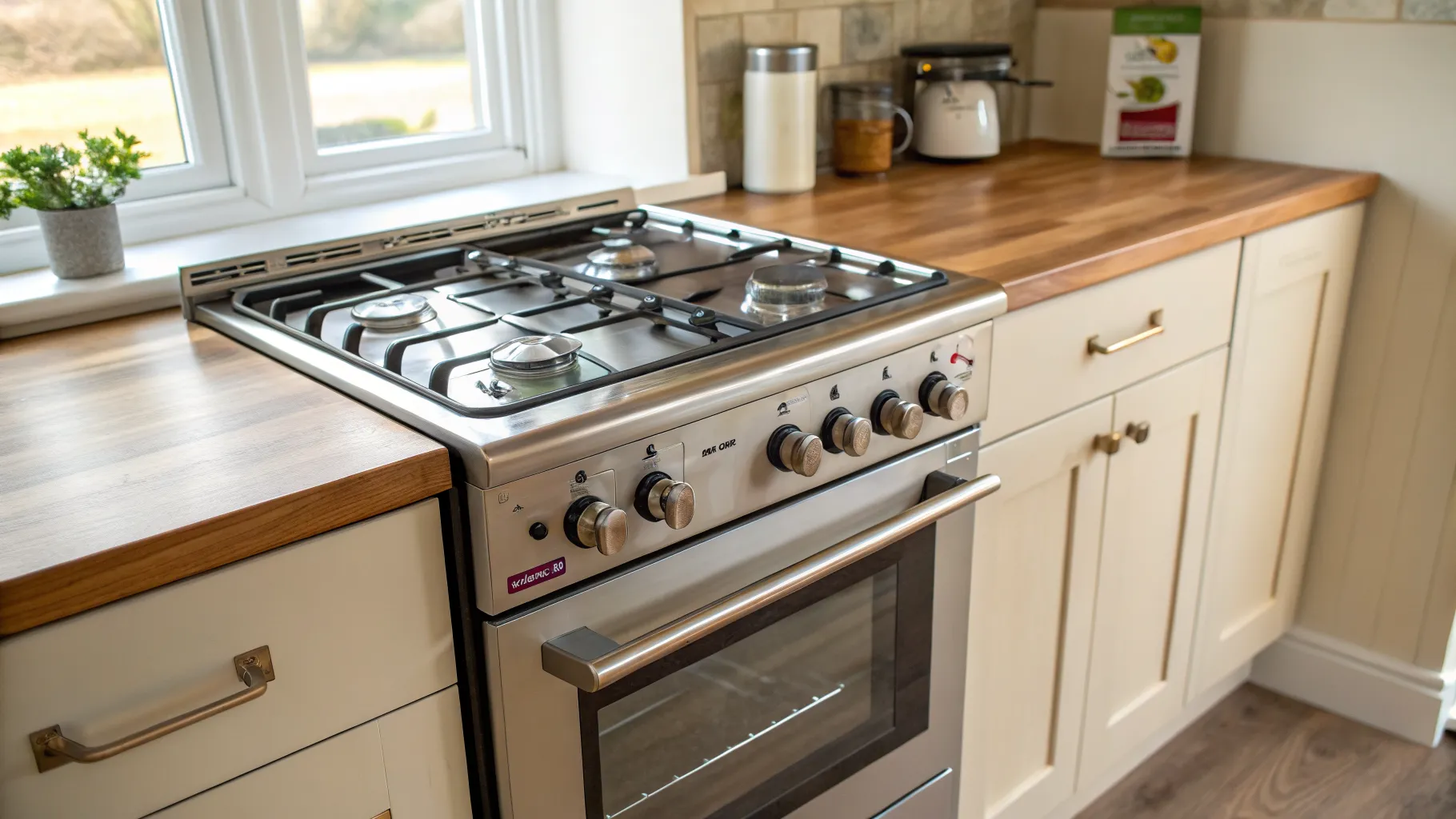
A freestanding gas cooker is still the workhorse of the British kitchen: it slides into a standard gap, runs off the gas supply most homes already have, and gives you the instant, visible flame that a lot of cooks simply prefer. This gas cooker buying guide is for the practical buyer choosing a freestanding model, not a built-in oven or a full range. It walks through the sizes that actually fit UK kitchens, the single-versus-double-oven decision, the features worth paying for, and a handful of real current models to start your shortlist.
We name only cookers confirmed as current with their manufacturers in June 2026, and we leave prices out because they move week to week. Check the current price at the retailer when you are ready to buy.
What size gas cooker do you need?
Freestanding gas cookers come in three standard widths, and the gap in your units decides which you can have.
- 50cm is the smallest mainstream size and the classic flat or small-kitchen choice. Despite the narrow body, many 50cm cookers still pack a double cavity. The Hotpoint HD5G00CCX, for example, is a 50cm cooker with a 69-litre main oven and a separate 32-litre grill cavity above it.
- 55cm is a slightly roomier in-between size, less common but useful when you have a touch more space and want bigger cavities than a 50cm allows.
- 60cm is the most popular size and where the choice is widest, including most double-oven models. A 60cm double such as the Beko FDG6271C gives you two gas ovens, an integral grill in the top cavity, and a four-burner hob with burners in different sizes.
Measure the aperture before you fall for a model. Walls and cabinets are rarely square, so measure the gap at the back, middle and front and work to the smallest figure. You also need clearance for heat: leave a gap of at least 20mm between the cooker sides and any worktop, and allow around 750mm between a gas hob and an extractor hood above it.
Single oven or double oven?
This is the main fork in the decision, and it comes down to how you cook.
A single oven gas cooker has one cavity that does both oven and grill duty. It is simpler, usually cheaper, and fine for one or two people or anyone who rarely cooks two dishes at different temperatures at once. The compromise is that you cannot grill and bake at the same time.
A double oven gas cooker gives you two separate cavities: a larger main oven for the roast, and a smaller top oven that usually doubles as the grill. For families, batch cooking, or a full Sunday lunch where the potatoes and the pudding want different heats, the second cavity earns its keep every week. Most doubles are 60cm, though, as noted, some clever 50cm models squeeze a second cavity in.
Gas ovens versus a gas hob with an electric oven
One point that trips buyers up: not every “gas cooker” is gas throughout. A true gas cooker uses gas for both the hob and the oven. Many shoppers actually prefer dual fuel, a gas hob paired with an electric (often fan) oven, because a fan oven heats more evenly and is easier to use for baking, while the gas hob keeps the responsive flame cooks like. If even oven temperatures and baking matter most to you, look at dual fuel as well as all-gas. If you want the whole appliance running on gas, perhaps for resilience in a power cut, stick to a full gas cooker.
Features worth checking
- Flame safety device (FSD). Cut-off valves that stop the gas if a flame goes out. Treat these as essential on both the hob and the oven; most current cookers have them.
- Catalytic liners or easy-clean enamel. Catalytic liners use oven heat to break down grease, so the cavity needs far less scrubbing. Common on mid-range models like the Beko doubles above.
- Burner spread. Look for a mix of burner sizes, typically two rapid burners plus smaller ones, so you can both sear and simmer.
- Energy rating. Cookers carry an energy label; an A-rated oven keeps running costs down without hurting performance.
- Glass lid. A hinged glass lid protects the hob and gives you a wipeable surface when the cooker is off.
- Warranty. Cover ranges from one to five years. A longer manufacturer warranty is a fair signal of confidence, so weigh it alongside the price.
Some real models to start your shortlist
- Hotpoint HD5G00CCX (50cm, double cavity) for a small kitchen that still needs two cavities, with a 69-litre main oven, four burners and a glass lid.
- Beko FDG6271C (60cm, double oven) for a family kitchen wanting two gas ovens plus an integral grill and a four-burner hob.
- Leisure CLB60GCC (60cm) for a well-regarded, attractive 60cm option at the friendlier end of the market.
Brands like Belling and Stoves sit at the more premium end of freestanding gas, so it is worth comparing their current 60cm cookers too. Check price at the retailer and confirm the exact model number before buying, as ranges are refreshed often.
Installation and safety
A gas cooker must be connected by a Gas Safe registered engineer; it is illegal in the UK for anyone not on the register to carry out gas work. When you book the connection, ask the engineer to confirm the appliance and your supply are compatible (natural gas versus LPG can need a different jet kit) and to check the room ventilation. You can verify any engineer’s status on the Gas Safe Register.
For more on cooking appliances, see our range cooker buying guide if you have the space for something larger, and our best budget range cookers picks if you are weighing a step up. The consumer group Which? also publishes independent freestanding cooker reviews.
Frequently asked questions
What size gas cooker should I buy? Match the cooker to your gap. The three standard widths are 50cm, 55cm and 60cm. A 50cm gas cooker suits small kitchens and flats, while 60cm is the most popular size and offers the widest choice, including most double-oven models. Measure the aperture at the back, middle and front and work to the smallest figure, leaving at least 20mm clearance each side.
Is a double oven gas cooker worth it? For families or anyone who regularly cooks more than one dish at different temperatures, yes. A double gas cooker gives you a large main oven and a smaller top cavity that usually doubles as the grill, so you can roast and grill at once. A single oven is cheaper and fine for one or two people who cook simply.
Can I install a gas cooker myself? No. In the UK a gas cooker must be connected by a Gas Safe registered engineer. It is illegal for anyone not on the register to carry out gas work, and DIY connection can be dangerous and void your home insurance. Always check the engineer’s status on the Gas Safe Register before work begins.
What is the difference between a gas cooker and a dual fuel cooker? A true gas cooker uses gas for both the hob and the oven. A dual fuel cooker pairs a gas hob with an electric oven, usually a fan oven, which heats more evenly and is better for baking. Choose all-gas if you want the whole appliance on gas; choose dual fuel if even oven temperatures matter more to you.
Do gas cookers have a flame safety device? Most current gas cookers include flame safety devices on the hob and oven, which cut off the gas automatically if a flame goes out. Treat an FSD as essential, especially in a home with children, and confirm it is fitted to both the hob and the oven before you buy.