Range Cooker Buying Guides
Range Cooker vs Built-In Oven: the Wiring Decides It

By the Hill & May team
Updated 2026
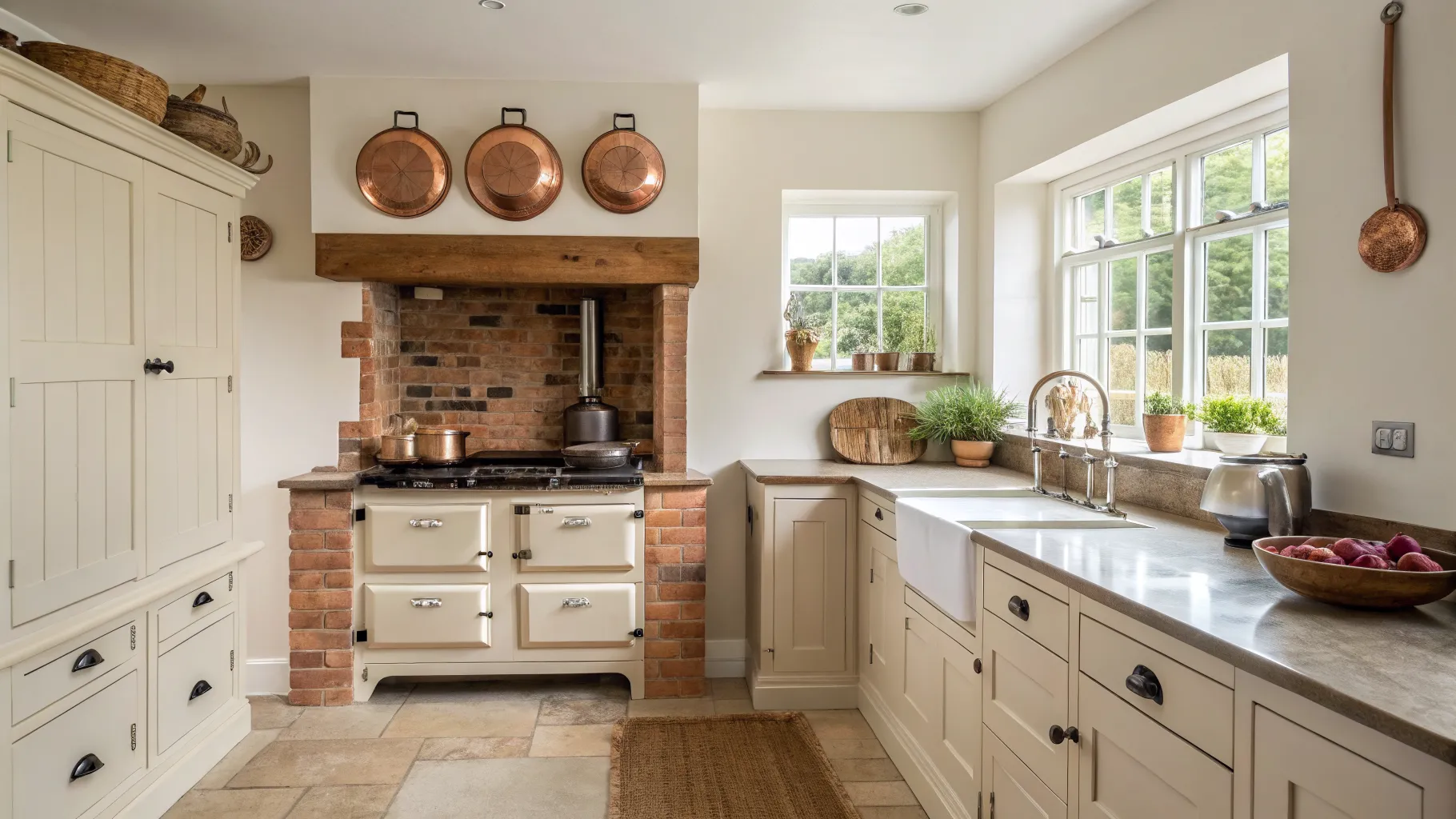
The range cooker vs built-in oven question is usually argued on looks, and then settled by an electrician. A 110cm dual fuel range cooker draws far more current than a built-in oven and hob pair, needs a dedicated high-amperage circuit, takes a metre-wide hole out of your cabinet run, and puts both oven doors at floor level. A built-in oven goes in a 600mm cabinet at whatever height you choose and runs on a much smaller supply. Neither is better cooking equipment. They are different pieces of joinery and different electrical installations, and getting it wrong costs you a rewire or a new run of units.
Here is what the manufacturers’ own specification sheets say, followed by the four things that actually decide it.
The numbers, from the makers’ own spec sheets
Take two representative appliances, a mainstream 110cm dual fuel range and a mainstream built-in double oven.
| Rangemaster Classic Deluxe 110 dual fuel | Bosch Series 6 MBA5785S6B built-in double oven | |
|---|---|---|
| Width | 1092mm | 594mm (niche 560 to 568mm) |
| Depth | 608mm, 670mm with handles | 550mm |
| Height | 905 to 930mm to the hotplate | 888mm, fits a standard tall housing |
| Cavities | Two electric ovens, 7 shelf levels each | 71 litre main, 34 litre top |
| Electrical load | 11.04 kW maximum | 6.3 kW total connected |
| Fuse | 45A cooker circuit | 32A |
| Hob | Included: 5 gas burners plus 2 radiant zones, 10.9 kW gas | Bought separately, needs its own supply |
| Self-clean | Not on this model | Pyrolytic in the top cavity |
Those two electrical figures are the whole argument in miniature. The range cooker needs its own heavy circuit run back to the consumer unit. The built-in oven needs a 32A supply, and if you then add an induction hob you need a second circuit for that, typically another 32A. Either route means a proper cooker circuit, so the question is not whether you need an electrician but how many circuits and where they terminate.
Four things that actually decide it
1. What your consumer unit and your floor will allow
If you are renovating back to bare walls, this barely matters. If you are swapping an appliance in an existing kitchen, it matters enormously. A house wired for a 32A built-in oven does not automatically have the capacity or the cable route for a 45A range cooker, and pulling a new cable from the consumer unit to the middle of a run of units means lifting flooring or chasing walls.
Check three things before you fall in love with a range: the spare ways in your consumer unit, the existing cable size at the cooker point, and whether the point sits where the range would go. Get that confirmed in writing by the electrician, not by the appliance salesperson.
2. Where you want the oven door
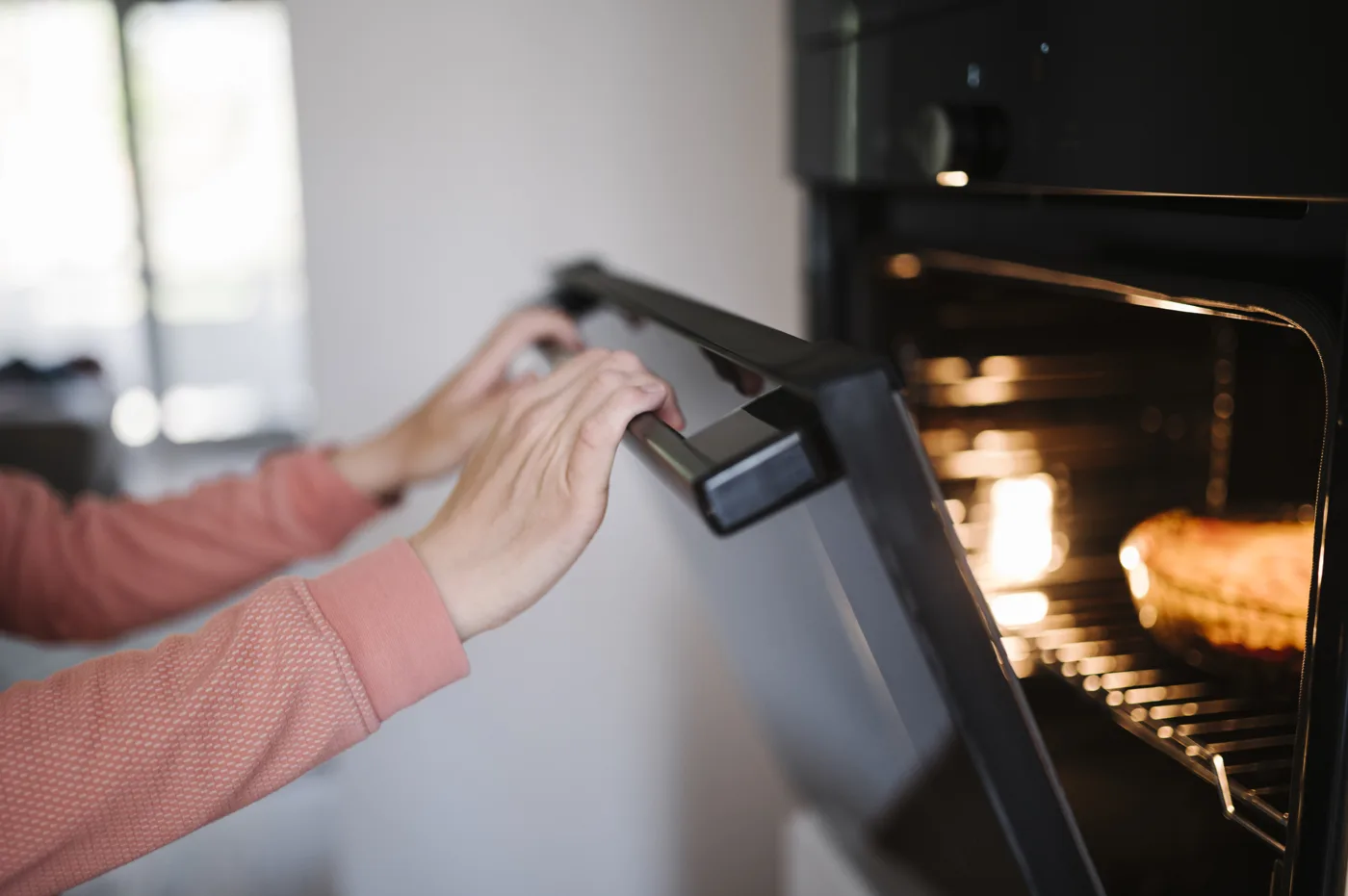
This is the argument most often ignored and most often regretted. A built-in oven can sit in a tall housing with the door at chest height, so a heavy roasting tin comes out at waist level with no bending and no twisting. A range cooker puts the main oven door low, and everything comes out of it in a crouch. If anyone in the house has a bad back, dodgy knees or is thinking ten years ahead, that single difference outweighs every other consideration here.
The counterpoint is real too. A range cooker’s hotplate sits at 905 to 930mm, slightly above a standard 900mm worktop, so pans on the back burners are easy to reach and there is no cabinet overhead to duck under. Cooks who work with big stockpots and heavy cast iron generally prefer it.
3. The metre of worktop you give up
A 1092mm range cooker takes 1092mm of your run, plus clearance, and it takes it in one piece. It cannot be split, moved round a corner, or tucked into an island later. In a galley or a small kitchen that is often the deal-breaker rather than the price, and it is why our range cooker sizing page starts with the gap rather than the cooker.
Built-in kit is modular in exactly the way a range is not. Oven in a tall unit on one wall, hob on an island, and you keep a continuous worktop. The trade-off is that you pay for the housing unit and the hob cut-out, and the hob eats base unit storage underneath. Our guides to kitchen base units and tall kitchen units set out the carcass sizes those need.
4. Extraction, which the regulations set for you
A range cooker with 10.9 kW of gas over 1092mm needs a hood as wide as the hob, which in practice means a 1100mm hood. Those are heavier, need a bigger duct run, and cost considerably more than the 600mm hood a built-in hob takes.
The minimum extraction rate is not a matter of taste. Approved Document F sets the intermittent extract rate for a kitchen at 30 litres per second where the extract is adjacent to the hob and ducted outside, rising to 60 litres per second where it is not directly over the hob. Recirculating hoods, which filter and blow the air back into the room, fall into that second category, and on a wide gas range they are a poor answer regardless of what the regulations tolerate. Our cooker hood buying guide covers how to read the airflow figures manufacturers quote.
Where each one genuinely wins
Choose a range cooker if you cook for more than four people regularly, you want serious burner power and pan space at once, you have the metre to give and the electrics to feed it, and you want the cooker to be the thing people look at when they walk into the room. Two cavities plus a separate grill on one appliance is a lot of capability in one purchase, and there is no housing unit to buy.
Choose a built-in oven and hob if your kitchen is under about four metres of run, you want the oven at a comfortable height, you want pyrolytic self-cleaning, or you want the layout freedom to put the hob on an island. It is also the easier appliance to replace: a built-in oven that fails is swapped for another 594mm oven in an hour, whereas a range cooker failing out of warranty is a much bigger event.
Consider the middle option that suits a surprising number of British kitchens: a 90cm range cooker. It keeps the range look and the twin cavities while giving back 200mm of worktop compared with a 110, and some models run on a 32A supply rather than 45A. Our 90cm roundup covers what that width costs you in hob space.
Two details worth checking before you order
The fuel mix changes the electrics. A dual fuel range puts the ovens on electricity and the hob on gas, which is why the Classic Deluxe 110 still needs 45A despite having gas burners. An all-electric range of the same width can need more again, and induction ranges more still. Our dual fuel explainer and electric cooker guide go through the differences.
Second ovens are not the same size. A range cooker’s second cavity is usually a genuinely useful oven. A built-in double oven’s top cavity on the Bosch above is 34 litres against 71 in the main, which is fine for a tray of roast potatoes and not much use for a turkey. If you regularly need two big ovens at once, either a wide range cooker or two separate single built-ins is the honest answer, and our page on oven configurations explains how the layouts differ.
Frequently asked questions
Is a range cooker better than a built-in oven? Neither is better at cooking. A range cooker gives you more hob and two usable cavities in one appliance, and a built-in oven gives you the door at a comfortable height, more layout freedom and easier replacement. The deciding factors are your electrical supply, the width of run you can spare and where you want to stand.
Does a range cooker need special wiring? Usually yes. A 110cm dual fuel model such as the Rangemaster Classic Deluxe 110 has a maximum electrical load of 11.04 kW and needs a dedicated 45A cooker circuit. Built-in ovens are typically 32A, so an existing cooker point may not be adequate for a range. Have an electrician confirm the cable size and the consumer unit before you buy.
Is a range cooker cheaper than a built-in oven and hob? Compare the whole installation rather than the appliances. A range cooker is one purchase with no housing unit and no hob cut-out, but it usually needs a wider hood and possibly a new circuit. A built-in oven and hob means two appliances, a tall housing, a worktop cut-out and two supplies, though a 600mm hood is much cheaper than an 1100mm one.
Can you replace a range cooker with a built-in oven and hob? Yes, and it is a common way to reclaim worktop, but it is a joinery job rather than an appliance swap. You need a base unit and worktop to fill the gap, a tall housing for the oven, and the existing cooker supply moved or split to feed both appliances.
Do range cookers need a bigger extractor? Yes. The hood should be at least as wide as the hob, so an 1100mm range wants an 1100mm hood. Approved Document F requires 30 litres per second of intermittent extract adjacent to the hob when ducted outside, or 60 litres per second where the extract is not directly above it, including recirculating hoods.
Do built-in ovens have self-cleaning that range cookers do not? Often. Pyrolytic cleaning, which burns residue to ash at high temperature, is widespread on built-in ovens, and the Bosch Series 6 double above has it in the top cavity. It is available on some range cookers but far from all of them, so check the specification rather than assuming.