Range Cooker Buying Guides
Best 90cm Range Cookers for a Standard UK Kitchen
By the Hill & May team
Updated 2026
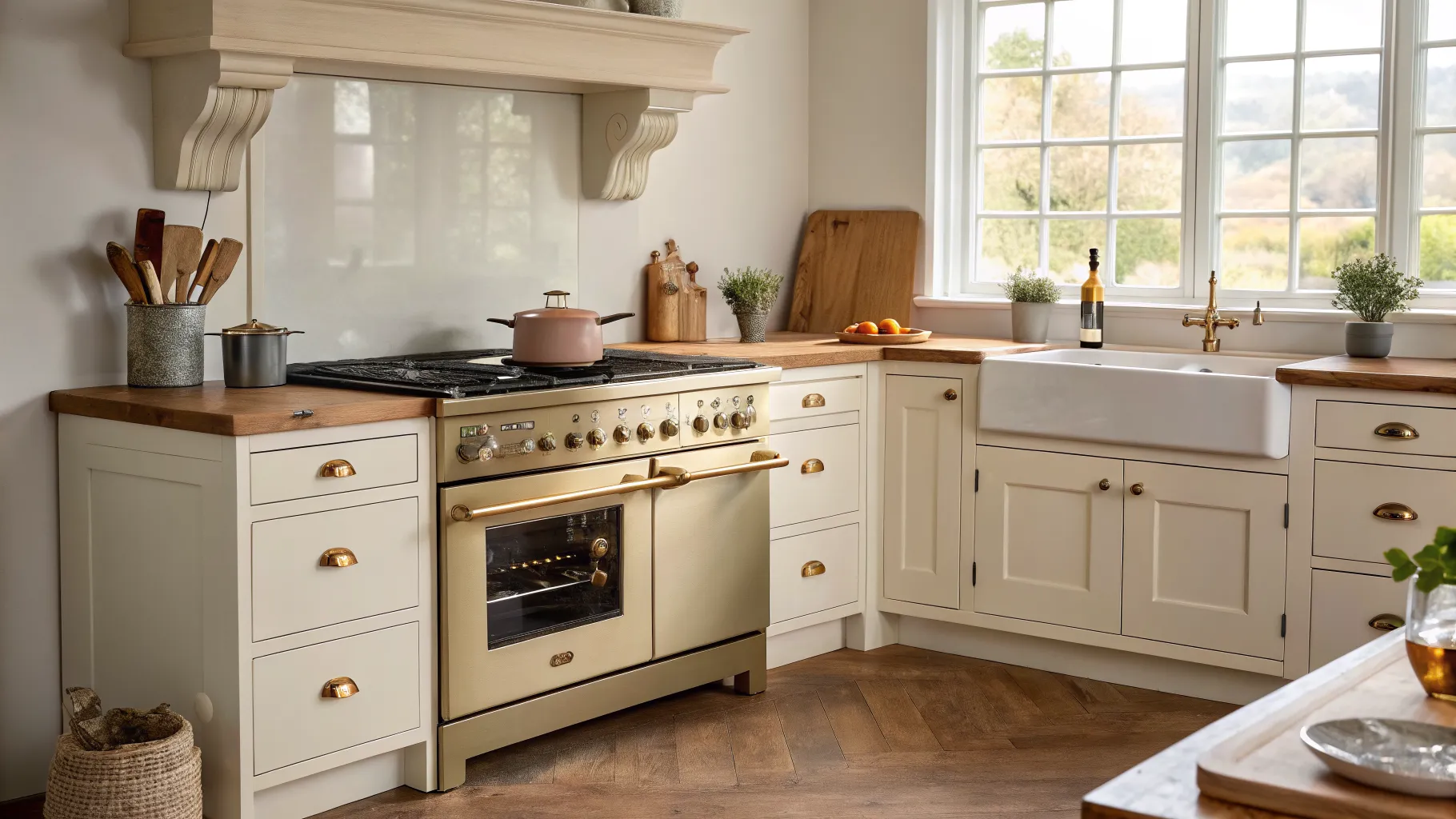
A 90cm range cooker is the one that actually drops into a normal kitchen. It is the smallest of the “true” ranges, wide enough to give you a proper hob and a second oven, but narrow enough to slot into a standard cabinet run without ripping the whole kitchen apart. Step up to 100cm or 110cm and you are usually committing to a bigger layout and a wider gap than most British kitchens were built around.
This guide is written for the country-kitchen buyer: someone who wants the look of a proper range, a hob you can cook a Sunday lunch on, and a cooker that fits the space they already have. We have grouped the recommendations by what matters most in a real kitchen, fit and finish first, then the choice between dual fuel and induction, then single versus twin oven. Every model named here was checked as current with the manufacturer in June 2026. Prices move constantly, so we have left them out; check the current price at the retailer when you are ready.
If you are still deciding on width or weighing up brands generally, start with our range cooker buying guide and the wider best range cookers for 2026 roundup.
Will a 90cm range cooker fit a standard UK kitchen gap?
This is the question that catches people out, so we will deal with it before any shopping.
A “90cm” cooker is almost never a full 900mm wide. The body is usually slightly under that. The Smeg Portofino, for example, measures 89.8cm across, and the Rangemaster Classic 90 is 900mm. Manufacturers want you to leave a small clearance on each side for heat, so the cooker is built to sit in a gap with a little room to spare, not wedged tight. Guidance varies from a couple of millimetres up to roughly a centimetre per side. Leave the gap. A range cooker gets hot down its flanks, and a unit jammed against the casing can scorch or warp over time.
Measure the aperture at three points: the back wall, the middle, and the front edge of the units. Walls are rarely square and cabinets drift. Use the smallest of the three figures as your real working width, then check the cooker fits inside that with clearance to spare.
Two more checks people skip:
- Depth. A 90cm range is typically 600 to 650mm deep. The Rangemaster Classic 90 is 608mm, the Smeg Portofino 60cm. Behind that you still need room for the gas bayonet or electrical connection, plus any pipework or sockets. Do not assume the cooker can sit flush to the back wall.
- Worktop height. This is a genuine country-kitchen trap. Standard base units are fitted at roughly 890 to 900mm to the top of the worktop. A range cooker has adjustable feet, but it only sits flush if your cabinets are at the matching height. Kitchens with thick solid timber or stone worktops can finish taller than the cooker’s maximum foot height, leaving the hob sitting below the surrounding surface. Confirm your worktop height against the cooker’s maximum height before you buy, not after it arrives.
The typical 90cm layout is one standard main oven plus a tall, narrow second oven on the side, with the hob running across the top. That tall oven is the format’s quiet strength: it takes several shelves and is excellent for batch baking. Going up to 100 or 110cm mostly buys you a second full-width oven or a central storage drawer, not a better cooking experience.
Best for the classic country look: Rangemaster
Rangemaster cookers are hand-built in Leamington Spa, and for a lot of buyers they are the default country-kitchen range.
The Classic Deluxe 90 is the one to look at first if you want the traditional cottage look. It is dual fuel, with brass-trimmed dials and handles, and comes in heritage finishes including Cream, Regal Blue, Racing Green and Charcoal Black, all with brass trim. It reads as a proper farmhouse range rather than a stainless box.
The plainer Classic 90 covers the same dual-fuel format with a cleaner fascia, a white LED touch display, a multifunction main fan oven, a tall fan oven and a five-burner gas hotplate. It has a self-adjusting magnetic plinth, which helps with that worktop-height fiddle, and a two-year parts and labour warranty. Colours include Pale Cream, Gloss Black, Misty Blue and Bordeaux. (You may see a “Classic 90 FX” variant advertised by some retailers; check the exact specification on the Rangemaster site before buying, as the naming is not consistent everywhere.)
If you want a more contemporary, professional look and the option of an induction hob, the Professional Plus 90 is the Rangemaster to choose. It offers gas, ceramic or induction hobs, dual fuel or full electric, two fanned ovens and a grill, plus a programmable oven and an auto-dimming clock. It has been independently lab-tested by Which?, which is reassuring for a higher-spend purchase.
You can see the current Classic 90 specification on the Rangemaster product page. For the eternal cream-Aga-versus-Rangemaster debate, see our AGA vs Rangemaster comparison.
Best for an honest induction option: Stoves
Stoves sells the same internals under two looks: Richmond is the traditional styling, Sterling is the contemporary one. Pick whichever face suits the kitchen; the cooking is identical.
For dual fuel, the Richmond S900DF (or Sterling S900DF) is the current 90cm model and converts to LPG if you are off the gas grid.
For all-electric induction, the Sterling S900Ei (or Richmond S900Ei) is a strong pick for a standard kitchen. It has a five-zone induction hob, three electric ovens including a multifunction cavity with even heat distribution, integrated grills and an A energy rating. It has been independently lab-tested by Which? and reviews well with owners. You can check the full specification on the Stoves Sterling S900Ei page.
One thing most roundups skip: every Richmond and Sterling comes in two tiers, Core (standard) and Deluxe (upgraded). The Deluxe upgrade worth knowing about on a 90cm is the Pro-flex oven splitter, which divides the tall oven into two independent cavities. That turns a 90cm Deluxe into a cooker with up to four separate oven spaces, which is a real gain for anyone who cooks a lot at once. Deluxe also adds extra colour options and gas-through-glass styling. If the Core spec looks tight for your cooking, the Deluxe is the upgrade to spend on.
Best three-hob choice in one range: Belling
Belling is made by the same group as Stoves, and the Farmhouse 90 range is the one we would point country-kitchen buyers at, partly because it comes in all three hob types: dual fuel (90DF), all-electric ceramic (90E) and induction (90Ei). That makes it easy to compare like for like.
The Farmhouse 90DF has five gas burners plus a 4kW wok burner, two ovens and a separate grill, with a tall 81-litre electric oven that does slow cooking, keep-warm and dough proving. The headline reason to consider Belling, though, is the warranty: three years parts and labour, where Rangemaster offers two. Over the life of a range cooker that matters, and reliability is one of the most common worries buyers raise. You can check the current specification on the Belling Farmhouse 90DF page.
Best value: Leisure
If the budget is tighter, Leisure builds country-styled 90cm cookers that cost less without looking cheap.
The Cuisinemaster CS90F530 is the dual-fuel option: a triple oven with a gas hob, A-rated, in black or stainless. The Cuisinemaster CS90C530 is the all-electric version with a ceramic hob, which is the budget electric route if you do not want gas but do not want to pay induction money either.
One caution: the older Cuisinemaster “Pro” line (PR90C530) has been discontinued, so do not buy it as a current model if a retailer still lists it.
Best modern design: Smeg
Smeg gives you two distinct looks. Victoria is the traditional one and Portofino is the modern one, and the pair make a clean illustration of single versus twin oven.
The Victoria TR93 is the country-kitchen Smeg. It has three cavities: a 61-litre main multifunction oven with seven functions, a 62-litre tall fan oven, and a six-burner gas hob with a 4.2kW rapid burner. The tall oven door opens at the side. In Cream (TR93P) it is the archetypal traditional Smeg; it also comes in black. Specification is on the Smeg Victoria TR93 page.
The Portofino CPF9 takes the opposite approach: one wide 115-litre oven with three fans, twelve functions, twenty automatic programmes, A+ energy and pyrolytic self-cleaning, which burns residue off at 500°C so you never scrub it. It comes in gas-hob and induction versions and eight colours including Anthracite, Cream and Orange. Specification is on the Smeg Portofino page. If you want one big oven and self-cleaning rather than two cavities, this is the pick.
The step up from all of these is the specialist tier, ILVE Roma 90 or a Lacanche 90, both sold in the UK as premium, made-to-order ranges. They are lovely, and well outside “standard kitchen value”, so we have left them as a note rather than a main recommendation. Heat-storage cookers like an Aga are a different category again; for those, see our AGA running costs per year guide.
Dual fuel or induction: which should you choose?
Dual fuel, a gas hob over electric ovens, is still the traditional country-kitchen default. Gas gives instant, visible heat, it works in a power cut, and many cooks simply prefer a flame. The trade-off is that it needs a gas supply and a Gas Safe registered engineer to install it.
All-electric induction has become the most popular choice for UK buyers. It is the fastest to heat, the safest (it heats the pan, not the surface), the easiest to wipe clean, and it needs no gas line. The catches are real, though. Induction only works with magnetic (ferrous) pans, so old copper, aluminium or some Aga-era pans will not work, and you may need to replace cookware. It also usually needs a dedicated electrical circuit; have an electrician confirm your supply before you commit.
Ceramic (radiant electric) hobs, like the Leisure CS90C530 or Belling Farmhouse 90E, are the budget electric middle ground. Cheaper than induction, a flat surface that wipes clean, but slower to respond and they hold residual heat after you switch off.
| Hob type | Responsiveness | Cleaning | Pan rules | Power cut | Install |
|---|---|---|---|---|---|
| Gas (dual fuel) | Instant flame | Burners and pan supports | Any pan | Still works | Gas Safe engineer |
| Ceramic | Slow to react | Easy flat wipe | Any flat-based pan | Does not work | Cooker circuit |
| Induction | Fastest | Easiest | Magnetic pans only | Does not work | Dedicated circuit |
Single big oven or twin oven: which is better for baking?
Most 90cm cookers are twin (or triple) cavity: a main oven plus a tall fanned oven. That lets you bake at two temperatures at once, or prove dough in one cavity while baking in the other. The tall oven takes several shelves and is genuinely good for batch baking.
A single large oven, like the Smeg Portofino’s 115 litres, gives you more usable shelf space in one go, which suits a big roast or a large single bake spread across more shelves.
On running cost, there is a nuance worth knowing: a twin oven used well can be cheaper, not dearer. If you only need to warm one tray, heating the small top cavity uses less energy than firing a big single oven for the same job. “Which is cheaper to run” depends on how you cook, not on the appliance itself. UK energy labels still use the A+++ to D scale for ovens rather than the newer A to G, with the detail held in the EU/UK product database; you can read the background on the European Commission energy label pages.
Installation and the legal bit
This is the part the retailer lists tend to gloss over, and getting it wrong is expensive.
A dual-fuel or gas range cooker must be installed by a Gas Safe registered engineer. This is a legal requirement, not a recommendation: gas work in the home is covered by the Gas Safety (Installation and Use) Regulations 1998, and the official guidance is the HSE’s Approved Code of Practice L56, which you can read on the HSE website. Do not let an unregistered fitter connect a gas hob.
An all-electric range is more flexible but still needs care. Most 90cm electric cookers draw enough current to need a dedicated cooker circuit, which is fixed wiring and falls under Part P building regulations, so it should be done by a qualified electrician. Only a lower-rated model designed to run on a standard 13A plug can be plugged in by you, and most full-size 90cm ranges are not in that category. Check the cooker’s rating before assuming you can simply plug it in.
And the question that comes up on every DIY forum: can you put a 60cm built-in oven in a 90cm range gap instead? You can, with a filler unit or new cabinetry to close the space, but you lose the wide hob and the second oven that made the range worth buying. If you want the range look and capacity, fit the range.
Frequently asked questions
How wide is a 90cm range cooker really? Usually slightly under 900mm. The body of a Smeg Portofino is 89.8cm and a Rangemaster Classic 90 is around 900mm, and both are designed to sit in a gap with a small clearance each side for heat. Measure your aperture at the back, middle and front, use the smallest figure, and leave the gap the manufacturer specifies rather than wedging the cooker in tight.
Do I need special pans for an induction range cooker? Yes. Induction only works with magnetic (ferrous) pans, so stainless steel and cast iron are fine, but most aluminium, copper and some older pans will not heat. Test a pan with a fridge magnet: if it sticks firmly to the base, it will work. Budget for replacing cookware that does not.
Do I legally need a Gas Safe engineer to install a dual-fuel range? Yes. Connecting a gas or dual-fuel cooker is legally restricted to a Gas Safe registered engineer under the Gas Safety (Installation and Use) Regulations 1998. An all-electric range that needs a dedicated cooker circuit should be wired by a qualified electrician under Part P.
What is the difference between the Rangemaster Classic and Professional Plus? The Classic and Classic Deluxe are the traditional country styling, dual fuel, with the Deluxe adding brass trim and heritage colours. The Professional Plus is the contemporary, more feature-heavy line, with the option of an induction hob, a programmable oven and a few premium extras, and it has been lab-tested by Which?.
Will my worktop height stop a 90cm range sitting flush? It can. Standard base units sit at roughly 890 to 900mm to the worktop, and a range has adjustable feet to match. But a thick solid-timber or stone worktop can finish taller than the cooker’s maximum height, leaving the hob below the surrounding surface. Confirm your worktop height against the cooker’s maximum height before buying.
Which 90cm range cooker is the most reliable? No brand is faultless, and reliability is the worry buyers raise most often, so judge it honestly. Belling’s Farmhouse range carries a three-year parts and labour warranty against Rangemaster’s two, which is a useful tie-breaker, and several Stoves and Rangemaster 90cm models have been independently tested by Which?. Buy from a retailer with good after-sales support and register the warranty on day one.