Installation, Kitchen Fit and the Country Kitchen
Landlord Gas Safety Check: Is the Gas Cooker Covered?

By the Hill & May team
Updated 2026
Does the landlord gas safety check cover the cooker? Yes, if you supplied it. Under regulation 36 of the Gas Safety (Installation and Use) Regulations 1998, every gas appliance and flue that a landlord owns and provides for a tenant’s use must be checked by a Gas Safe registered engineer every 12 months, and a gas range cooker, a freestanding gas cooker or a gas hob in a let kitchen is exactly that kind of appliance. If the tenant brought their own cooker, the appliance is theirs to look after; you stay responsible for the pipework that feeds it. This page sets out where the line falls, what the engineer looks at on a cooker, and the paperwork that trips landlords up.
Who counts as a landlord for this rule
The Health and Safety Executive (HSE) reads “landlord” widely. Its guidance on who needs gas safety checks includes housing associations, councils, hotels, B&Bs, hostels and boarding schools, and also:
- anyone with a lodger who pays rent;
- anyone with live-in domestic staff;
- anyone who rents out the flat above their shop;
- hosts paid for a visiting student’s food during a short stay.
A family member living with you rent-free does not trigger the duty, though HSE still recommends servicing to the manufacturer’s schedule. A tenant who sublets rooms does not become a landlord either: the duty stays with the original landlord and cannot be passed down.
Which cookers the check covers
| Situation | Is the cooker in your annual check? |
|---|---|
| Gas or dual fuel range cooker you supplied with the let | Yes |
| Freestanding gas cooker or built-in gas hob you supplied | Yes |
| LPG cooker you supplied (bottled or bulk tank) | Yes: LPG is gas under the regulations |
| Cooker the tenant bought and brought with them | No, the tenant is responsible for it |
| Cooker you sold to the tenant | No, once sold it is theirs |
| Cooker left behind by a previous tenant | Remove it or have it checked, and make ownership clear before re-letting |
| Electric range cooker | Not a gas check matter (electrical safety rules apply instead) |
The HSE’s page on what needs a gas safety check covers “all permanent and portable gas appliances and flues” that the landlord provides. A tenant-owned cooker sits outside your duty, but parts of the installation and pipework that supply it do not. That is why the cleanest approach on a let with a range cooker is to supply the cooker yourself and put it on the record every year: an unchecked tenant appliance on your gas supply is a risk you cannot see.
A dual fuel range cooker, gas hob over an electric oven, is a gas appliance for this purpose because the hob burns gas. If you are choosing one for a let, our dual fuel range cooker page explains the trade-offs.
How often, and the two-month early window
The check must be done every year on each appliance and flue. Two details matter for anyone juggling bookings or tenancy changes:
- New cooker installed mid-cycle. It needs its first check within 12 months of installation. Since the 2018 amendment, you can stretch that first interval by up to two months, once per appliance, to bring the new cooker into line with the date of your other appliances.
- Checking early without losing the date. The same 2018 amendment lets you have the check done up to two months before it is due and keep the original anniversary, a little like an MOT. If you use that flexibility, you must keep the records until two further checks have been done, so you can show the timeline.
Before any new lease starts, the appliances must have been checked within the previous year. A record that is still inside its 12 months can be copied to the new tenants.
What the engineer checks on a cooker
The record must confirm the checks in regulation 26(9): the effectiveness of any flue, the supply of combustion air, the operating pressure or heat input, and that the appliance is working safely. On a range cooker in a kitchen that usually means:
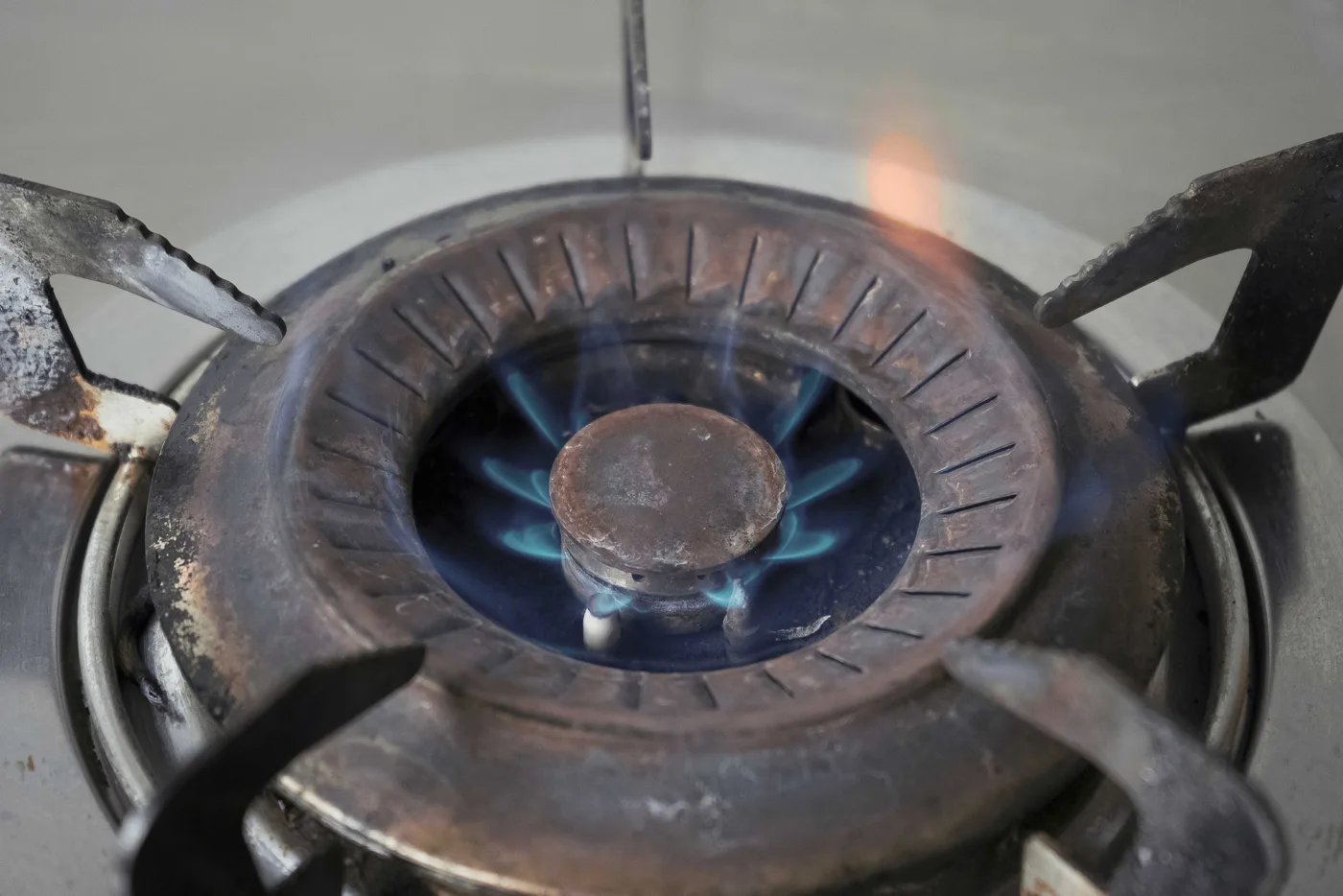
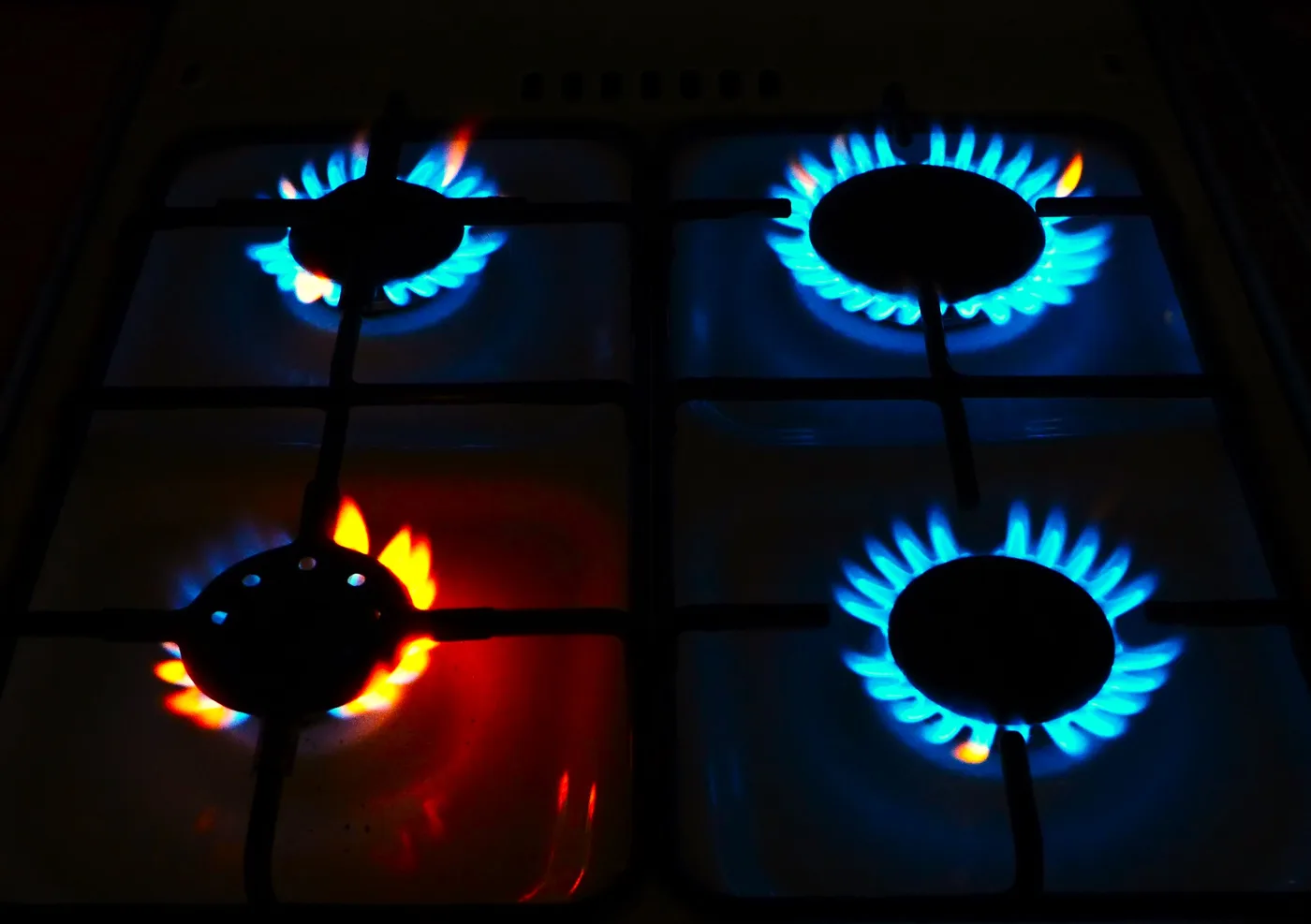
- Burners and flame picture. Each hob burner and oven burner is lit and the flames inspected; yellow, lazy or lifting flames point to poor combustion.
- Flame safety devices. On cookers fitted with them, the engineer checks that the gas shuts off when a flame goes out.
- Ventilation. Whether the room has the air supply the cooker needs, which matters more in small kitchens and in older cottages where vents have been blocked to cut draughts.
- Pressure and tightness. Many engineers also do a tightness test on the whole system. HSE notes installation pipework is not strictly part of the annual check, but recommends asking the engineer to test the full system and look at the visible pipework at the same visit.
- Stability. A freestanding cooker should not tip forward when the oven door is pulled or leaned on. Council and engineer checklists record whether a stability bracket or hook-and-chain is fitted, and a missing one is a common note on a record.
- Connection. The flexible hose to a freestanding or range cooker should be the right type and length, not kinked, stretched or trapped behind the appliance.
An Aga or other gas heat-storage range has a flue, so it gets a flue check too. Our Aga range cooker page covers the gas, LPG and electric versions.
The record: what it must say and who gets it
According to the HSE on gas safety records, the record (often still called a CP12, after the old form) must show at least:
- a description and the location of each appliance or flue checked;
- the engineer’s name, Gas Safe registration number and signature;
- the date of the check and the property address;
- the name and address of the landlord or agent;
- any safety defect found and what was done about it.
Then:
- Existing tenants get a copy within 28 days of the check.
- New tenants get a copy before they move in.
- Keep records for at least two years (longer if you use the early-check option above).
- Electronic copies are fine if the tenant agrees and can open them, but you must give a paper copy if asked.
Holiday lets and short stays
For stays of less than 28 days, the HSE allows you to display a legible copy of the record in a prominent place in the property instead of handing one to every guest. A holiday cottage with a gas range cooker is squarely inside the rules: the check, the record and the display apply in the same way as for a long let. If the cottage is off the mains on LPG, the same applies to the tank or bottle installation, and our LPG cooker page explains how bottled and bulk supplies differ.
When the engineer finds a fault
The record is issued on the day, even if a fault is found and not yet fixed. The landlord must act promptly on any defect, and an appliance suspected of being unsafe should not be used until it is put right. If an engineer has turned a cooker off as dangerous, it stays off until it is repaired and passed. A cooker is not a heating appliance, so the HSE’s duty to provide emergency heating does not apply, but tenants without a way to cook will want a quick fix or a temporary electric hob.
Keep a note of the follow-up work alongside the record. The HSE describes the record as a “living document” that should show what was done after the check.
Carbon monoxide alarms and the cooker
In England, the Smoke and Carbon Monoxide Alarm (Amendment) Regulations 2022 require landlords to fit a carbon monoxide alarm in any room with a fixed combustion appliance. Gas cookers are specifically excluded from that requirement, so a kitchen with only a gas range cooker does not legally need one. A boiler in the same kitchen does trigger it. Many landlords fit one anyway, and it costs little next to the risk.
A simple routine for a let with a gas range cooker
- Decide who owns the cooker and write it into the tenancy or inventory.
- Book the annual check a few weeks before the anniversary, inside the two-month window.
- Ask the engineer to tightness test the whole system and confirm the cooker stability bracket.
- Send the tenant the record within 28 days; display it in a holiday let.
- File the record and any follow-up invoices for at least two years.
- Service the cooker to the maker’s schedule; the safety check is not a full service.
If you are replacing the cooker in a let, our gas cooker buying guide and gas vs electric vs induction comparison are the next reads.
Frequently asked questions
Does a landlord gas safety check cover the cooker? Yes, if the landlord supplied it. Every gas appliance and flue the landlord owns and provides for tenants must be checked every 12 months. A cooker the tenant owns is the tenant’s responsibility, though the landlord stays responsible for the pipework supplying it.
Is a gas hob over an electric oven included? Yes. The hob burns gas, so it is a gas appliance and goes on the record if you supplied it.
Can I get the gas safety check done early? Yes. Since 2018 you can have it done up to two months before the due date and keep the original anniversary, as long as you keep the records until two further checks have been done.
Do I need a gas safety check for a holiday let with a gas cooker? Yes. Holiday lets and B&Bs fall within the rules. For stays under 28 days you can display a copy of the record prominently in the property rather than give one to each guest.
Does a kitchen with a gas cooker need a carbon monoxide alarm? Not under the 2022 rules in England, which exclude gas cookers. A boiler, gas fire or stove in the room does require one.
Is the gas safety check the same as a cooker service? No. The check confirms the appliance is safe on the day. Servicing to the manufacturer’s schedule is a separate duty to keep it maintained.
Sources
- HSE: Gas safety checks, who needs them?
- HSE: Gas safety checks, what needs them?
- HSE: Gas safety check records and what to keep
- HSE: Gas safety checks, what if…?
- Smoke and Carbon Monoxide Alarm (Amendment) Regulations 2022 (SI 2022/707)