Buying Guides
Kitchen Door Handles: Which Hole Centres Actually Fit

By the Hill & May team
Updated 2026
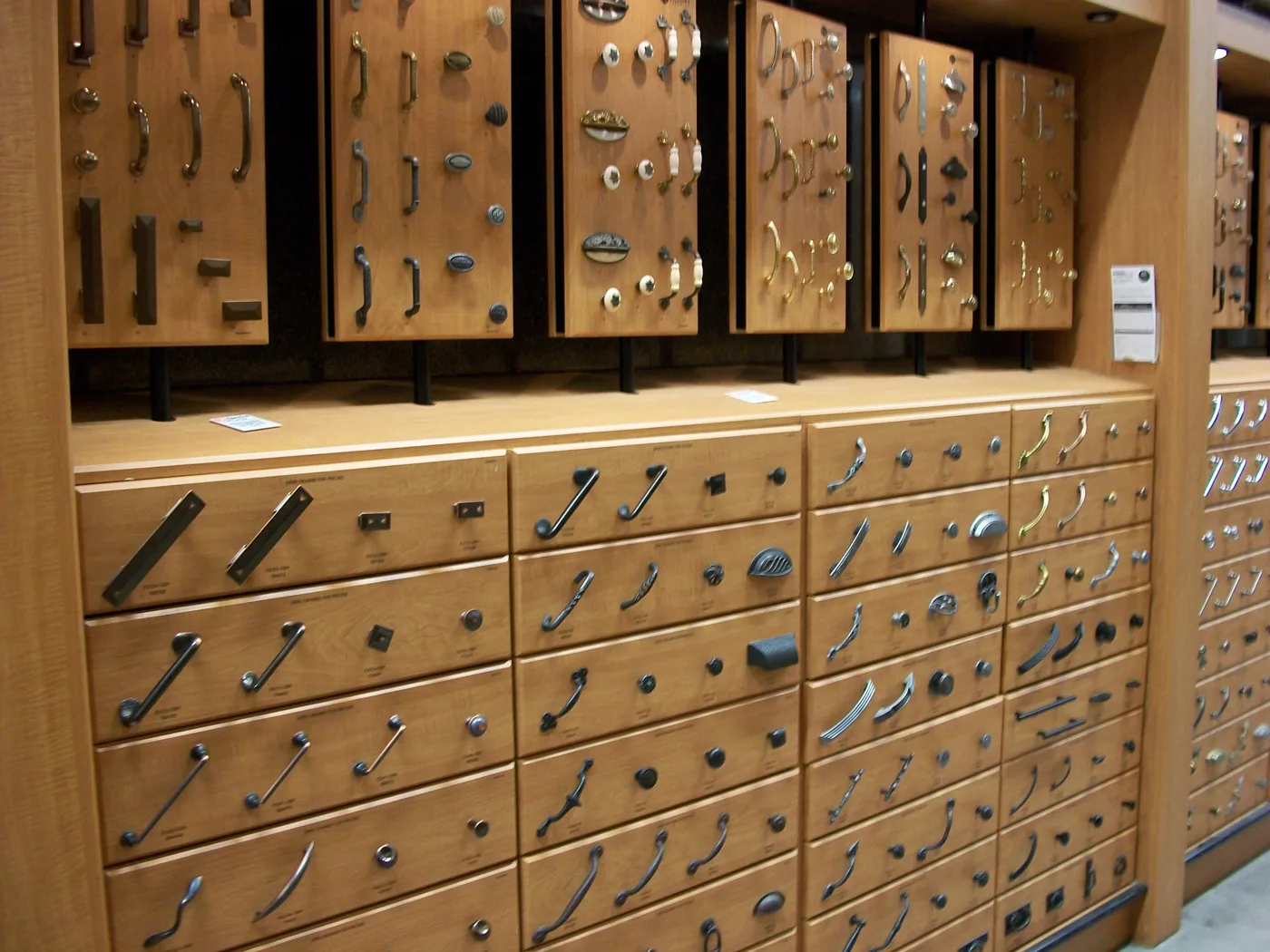
Choosing kitchen door handles looks like a decision about taste and turns out to be a decision about measurements. Get the finish wrong and you live with something you do not love. Get the hole centres wrong and the handle physically will not go on the door, or worse, it goes on over holes drilled for something else. This guide covers the sizing system every British kitchen is built to, which handle type suits which unit, which finishes survive a working kitchen, and the fixing screw nobody tells you to buy.
The number that matters: hole centres
Every two-screw handle is sold by its hole centres, sometimes written as centre-to-centre or CTC. It is the distance from the middle of one screw hole to the middle of the other, and it is the only measurement that decides whether a handle fits holes that already exist.
The available sizes are not random. Kitchen carcasses across Europe are built to the 32mm system, a manufacturing convention in which fixing points fall at multiples of 32mm. That is why the standard ladder of hole centres runs 64, 96, 128, 160, 192, 224, 256, 288 and 320mm. In British kitchens, 128mm and 160mm are the two you will meet most often on unit doors.
A handle’s overall length is always longer than its hole centres, usually by 20 to 40mm depending on how far the ends project past the fixings. When you are checking clearance next to a wall, an oven housing or a corner unit, measure the overall length, not the centres.
What size handle for what unit
| Unit | Sensible hole centres | Notes |
|---|---|---|
| Small drawer (up to 400mm) | 64 to 96mm | A single knob also works |
| Standard drawer (500 to 600mm) | 96 to 160mm | 128mm is the safe default |
| Wide drawer (800mm and over) | 160 to 224mm, or two handles | Two smaller pulls often look better than one long one |
| Base and wall unit door | 96 to 160mm | 128mm suits most 400 to 600mm doors |
| Tall larder or oven housing door | 192 to 320mm | Long pulls balance the height |
| Pan drawer | 160 to 224mm | The handle takes real weight, buy solid |
Two rules keep proportions right. A handle should look like it belongs to the door rather than sitting on it, so scale up with the unit width. And once you are past about 800mm of drawer front, a pair of handles reads better than one very long pull and gives you a place to pull from at either end.
The handle types, and where each earns its place
Knobs are the traditional choice and the most forgiving, because a single screw hole means no centres to match. They suit Shaker and in-frame doors and small drawers. They are the least comfortable to grip with wet or full hands, which is why most kitchens use them on doors and something longer on drawers. Our Shaker kitchen guide covers the door style they sit best on.
Cup handles, also called bin pulls, are the half-moon shape that came out of Victorian and Edwardian kitchens. They are almost always drawer hardware, because you pull upwards and outwards into the cup. Most are sold by overall width rather than hole centres, and single-fix versions exist alongside two-screw ones. Corston’s Elm cup handle, for example, is listed at 164mm across in its medium size.
Bar and T-bar handles are the modern default: a straight round or square section on two posts. Round bars in 12 to 16mm diameter suit hands better than very thin ones. They dominate contemporary slab-door kitchens and work fine on Shaker doors if you keep the diameter modest.
D-handles and pull handles are the squarer, chunkier relative of the bar, projecting less from the door. Good where you walk past a run of units and do not want to catch a pocket.
Edge and profile handles are milled into or fixed along the top edge of the door. They give a near-handleless look with a real grip, and cost far less than a true handleless system. If you are weighing that up, in-frame versus handleless sets out the difference.
Finishes: what actually survives a kitchen
Finish decides how the handle ages, and the honest split is between coated finishes that stay put and living finishes that change on purpose.
Lacquered brass and antique brass carry a clear coat that holds the colour. It is the low-maintenance choice, but the lacquer can wear through on the handles you touch fifty times a day, and you cannot repair one handle without it looking different from its neighbours.
Unlacquered brass is deliberately bare. It oxidises, darkens, and picks up bright patches where hands rub it. Armac Martin, Corston and From The Anvil all sell it and all describe it the same way: a finish that matures rather than a fault. If you want an even, unchanging brass, do not buy it. If you want a kitchen that looks lived in after two years, it is the only finish that gets there honestly.
Matt black is usually a powder coat over steel or zinc alloy. Durable and forgiving on fingerprints, but a chip goes to bare metal and shows. Check the base material rather than just the colour.
Brushed and satin stainless is the workhorse near sinks and hobs. It shrugs off water, does not spot, and hides marks better than polished chrome, which shows every fingerprint under a downlight.
Pewter and iron finishes suit cottage and country kitchens and hide wear well. Hand-forged iron from makers such as From The Anvil, which forges in Llandrindod Wells in Wales, has an irregularity that cast handles cannot fake.
One practical point on siting: whatever you choose, the handles either side of the sink and next to the hob take the most water, heat and cleaning product. If a finish is going to fail, it fails there first.
Solid brass, stainless or zinc alloy
Most inexpensive handles are cast zinc alloy, often sold as zamak, then plated or powder coated. They are fine on light doors and they are what most volume kitchen suppliers include. They are also brittle, so a snapped post on a pan drawer is nearly always a zinc handle.
Solid brass is heavier, will not snap, and can be refinished. Armac Martin has been making solid brass hardware in Birmingham since 1929 and sells by the handle rather than the pack, which is why a full kitchen of it costs several times a plated set. Stainless steel sits between the two: strong, corrosion-proof, but limited to the finishes stainless can take.
The sensible compromise in most kitchens is to put the good hardware where hands go most, which is the pan drawers, the bin pull and the larder, and accept plated hardware on the wall units nobody touches.
Fitting: the screw is the bit people get wrong
Handles are fixed with M4 machine screws through the door, not woodscrews. The thread is 4mm, and length is what varies.
- 18mm doors, which is standard for most British kitchen units, take M4 x 25mm.
- Thicker doors of 20 to 22mm, and doors with a thick applied moulding, may need 30mm or longer.
- Knobs and cup handles on a single fixing often ship with a shorter screw, commonly 18 to 20mm.
Handles frequently arrive with one length in the bag, so check it against your doors before you start rather than halfway through the run. Buying a box of M4 screws in two lengths costs very little and saves a second trip.
For drilling, use a jig or make a card template so every door is marked identically, drill from the face side into scrap timber to stop the exit splintering, and start with a bradawl mark so the bit does not wander on a lacquered door. On painted doors, drill at low speed. And measure the height of the handle from the top or bottom edge of the door, not from the worktop, because floors are rarely level.
How many handles, and a note on mixing
Count every door and drawer front, then add two. Corner units with a bi-fold door take one handle, not two. Integrated appliance doors usually need a matching appliance pull, which is longer and often a different fixing.
Mixing types within one finish is normal and looks intentional: knobs on doors, cup handles or bars on drawers. Mixing finishes across a kitchen works when there is a reason for it, such as brass on the island and stainless around the sink run. Mixing three or more starts to look like a compromise rather than a scheme. If you are working out the colour scheme first, kitchen colour ideas is the place to start, and the kitchen cabinet sizes guide has the unit widths you will be measuring against.
Frequently asked questions
What size are standard kitchen door handles? Hole centres follow the 32mm system, so the standard ladder is 64, 96, 128, 160, 192, 224, 256, 288 and 320mm. On British unit doors 128mm and 160mm are the most common. Always measure between the centres of the screw holes, not the overall length of the handle.
How do I measure kitchen handles for existing holes? Measure from the middle of one hole to the middle of the other. That figure is the hole centre size, and any handle sold at that size will bolt straight on. If your holes fall between standard sizes, the unit was probably drilled for a specific handle and you may need to fill and redrill.
What screws do kitchen door handles use? M4 machine screws. For an 18mm door, which is the standard thickness in most British kitchens, M4 x 25mm is right. Thicker doors or applied mouldings need 30mm or longer, and single-fix knobs often use a shorter screw of around 18 to 20mm.
Should I put knobs or handles on kitchen drawers? Handles on drawers, in almost every case. You pull a drawer with the weight of its contents behind it, and a knob concentrates that on one small grip. Cup handles and bar pulls spread the load and are far more comfortable on pan drawers.
Does unlacquered brass tarnish in a kitchen? Yes, and that is the point of it. Unlacquered brass is a living finish that oxidises and darkens, with brighter patches where hands rub it. Steam and cleaning products speed it up. If you want brass that stays the same colour, buy lacquered or PVD-coated instead.
Are expensive solid brass handles worth it? On the units you touch constantly, yes. Solid brass will not snap at the post the way cast zinc alloy can, and it can be refinished rather than replaced. On wall units that are opened once a week, plated hardware performs perfectly well, so spending the budget where hands go is the sensible split.