Buying Guides
In-Frame Kitchen vs Handleless Kitchen: Which Suits You?

By the Hill & May team
Updated 2026
An in frame kitchen and a handleless kitchen sit at opposite ends of the design spectrum, which is exactly why people end up torn between them. One shows off its joinery with a visible hardwood frame around every door; the other hides all its hardware for a flat, quiet run of cabinets. Both look expensive, both are made well, and both cost more than a standard lay-on kitchen. The right choice comes down to the age and style of your home, how you use the room, and how much cleaning you are willing to do. Here is how the two compare on the things that actually matter.
What each style actually is
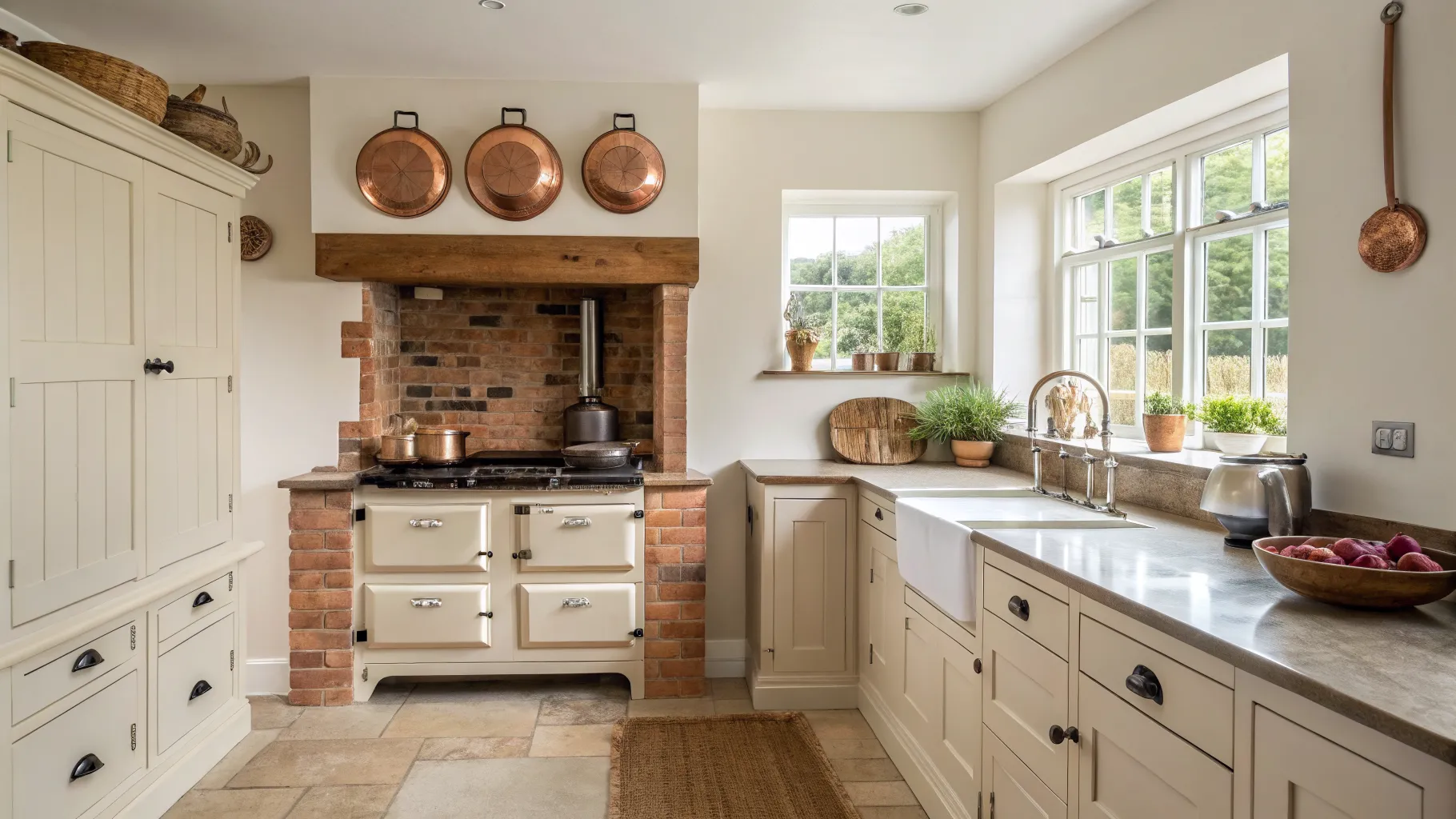
An in-frame kitchen has a solid timber frame fixed to the front of each cabinet, and the door sits inside that frame, much like a traditional piece of furniture. You see a grid of painted or oak framework around every opening, and the doors are almost always a Shaker profile. It is the classic country and period look, closely related to the Shaker kitchen, just built to a higher and more expensive standard.
A handleless kitchen removes the handles entirely. Instead you either have a recessed rail running along the top of each cabinet that your fingers hook into, or a push-to-open mechanism behind the door. The result is a flat, unbroken plane of cabinetry with no ironmongery on show. It reads as modern and minimal, and it is the natural partner to a gloss or matt slab door rather than a Shaker one.
Looks and which home they suit
This is the first thing to settle, because the two styles pull a room in opposite directions.
In-frame suits period and rural homes: cottages, farmhouses, older brick houses, anywhere with character you want to echo. It has a heritage feel that does not date, and it rewards a room with a bit of space, since the framework and shadow lines look best when they are not crammed. It also pairs beautifully with a range cooker and a Belfast sink, which is why it dominates the traditional country kitchen.
Handleless suits modern houses and open-plan kitchen-diners. When the cabinets are visible from a sofa or dining table, a clean run with no handles lets the furniture recede into the architecture rather than shout for attention. If your taste runs contemporary, or the kitchen is part of one big living space, handleless usually looks more at home. Our cottage and traditional kitchen ideas page shows where in-frame earns its keep, if that is the direction you lean.
Cost: the biggest practical difference
There is a real gap here. In-frame is one of the most expensive ways to build a kitchen because the frame is hand-fitted by skilled joiners, which adds both material and labour. As a rough guide, an in-frame kitchen commonly costs somewhere in the region of 30 to 50 per cent more than an equivalent standard lay-on kitchen.
Handleless costs more than a standard kitchen too, but by a smaller margin, often around 10 to 15 per cent, to cover the recessed rail or the push-to-open gear and the tighter tolerances the look demands. So while both are a step up in price, in-frame is usually the pricier of the two for a like-for-like layout. Prices move constantly, so treat these as proportions rather than fixed figures and get quotes for your actual room.
Cleaning and day-to-day living
Neither style is maintenance-free, and they get dirty in different places.
An in-frame kitchen has more nooks. The recess where the door meets the frame collects dust and cooking grease over time, and getting into those corners takes a little more effort than wiping a flat door. It is not onerous, but it is real, especially near the hob.
A handleless kitchen is very easy to wipe down across the door faces, with no handles to clean around. The catch is the recessed finger rail, which is the one part that shows grime quickly. A daily wipe keeps it crisp; neglect it for a couple of weeks and it looks tired. Push-to-open drawers also have a quirk: you cannot shove one shut hard, or the mechanism bounces it back open.
Storage and durability
The frame on an in-frame kitchen does eat a small amount of internal cabinet volume, which is worth knowing if your kitchen is tight on space, though in a large room it is trivial. In return, the frame protects the door edges and adds real structural strength, and a well-made in-frame kitchen is built to last decades.
A handleless kitchen gives you slightly more usable space inside each cabinet because there is no frame stealing volume. Durability is more about the door material and the quality of the opening mechanism than the style itself, so buy from a maker whose push-to-open or rail systems have a track record.
So which should you choose?
Pick an in frame kitchen if you have a period or country home, a bit of room to let the joinery breathe, a love of visible craftsmanship, and the budget to pay for it. Pick a handleless kitchen if your house is modern or open-plan, you want the cabinets to disappear into a clean line, and you would rather keep the wipe-down simple. If you are somewhere in the middle, a painted Shaker lay-on kitchen gives much of the in-frame character for less money, which is why it remains the most popular compromise. For the classic route, the John Lewis guide to kitchen styles is a useful neutral overview, and the trade body KBB Review tracks where the market is heading.
Frequently asked questions
What is an in frame kitchen? An in frame kitchen has a solid timber frame fixed to the front of each cabinet, with the door set inside that frame like a traditional piece of furniture. You see a painted or oak framework around every opening, and the doors are almost always a Shaker profile, which gives the classic period and country look.
Is an in-frame kitchen worth the extra cost? If you have a period or country home and value visible craftsmanship, yes, because the frame adds strength, protects the door edges and delivers a heritage look that does not date. In a modern open-plan home, a handleless or standard Shaker kitchen may suit the space better for less money.
Are handleless kitchens hard to keep clean? The door faces are very easy to wipe because there are no handles, but the recessed finger rail collects grime and needs a daily wipe to stay crisp. Push-to-open versions avoid the rail but cannot be slammed shut without bouncing back open.
Which is more expensive, in-frame or handleless? In-frame is usually the pricier of the two for the same layout, often 30 to 50 per cent more than a standard kitchen because the frame is hand-fitted. Handleless typically adds around 10 to 15 per cent over a standard kitchen. Always get quotes for your own room, as prices vary.
Can you have a handleless in-frame kitchen? Not really, as the two styles work against each other. An in-frame kitchen is defined by its visible frame and traditional doors, usually with handles or knobs, while handleless is defined by hidden hardware and a flat, modern face. If you want a middle ground, a Shaker kitchen with slim modern handles is the closer blend.
Do in-frame kitchens have less storage? Slightly, because the frame takes up a small amount of internal cabinet volume. In a large kitchen the difference is negligible, but in a very tight galley it is worth factoring in when every centimetre counts.