Fuel Types and Running Costs
Bulk LPG Price Per Litre: About 68p, and How to Pay Less

By the Hill & May team
Updated 2026
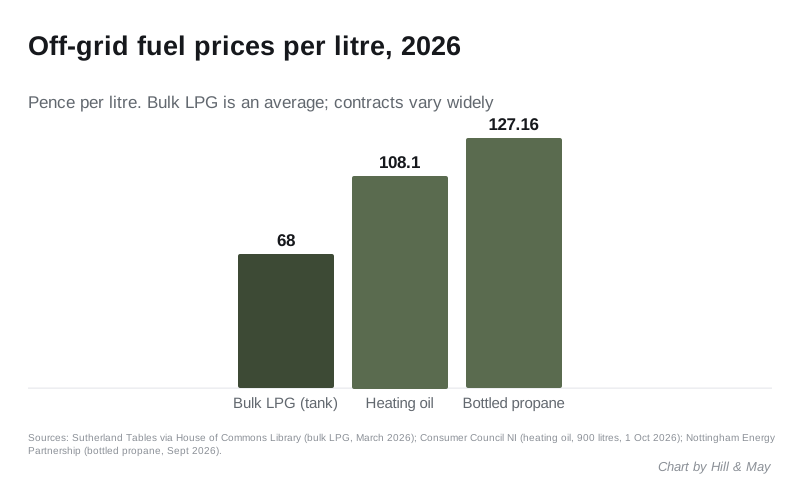
The average bulk LPG price per litre for a home tank was about 68p in March 2026, according to the Sutherland Tables figures quoted by the House of Commons Library in its August 2026 briefing on off-grid fuels. Remarkably, that was the same as in March 2024 and March 2025. What you actually pay can sit well either side of it: households comparing notes on forums in 2024 and 2025 reported contract prices from the low 40s to the mid 60s per litre for the same fuel in the same county.
That spread is the real story. If your house runs a range cooker on propane, and often the boiler too, the price you are on depends more on your contract and how recently you checked it than on the market.
Bulk LPG against the other off-grid fuels
| Fuel | Price per litre | Source and date |
|---|---|---|
| Bulk LPG (propane, tank) | about 68p | Sutherland Tables via House of Commons Library, March 2026 |
| Heating oil (kerosene) | 108.1p | Consumer Council NI survey, 900 litres, 1 October 2026 |
| Bottled propane | 127.16p | Nottingham Energy Partnership, September 2026 |
Litre for litre, bulk LPG looks cheap, but a litre of propane holds less energy than a litre of kerosene. So LPG still costs more to heat a house with. The Sutherland Tables’ March 2026 estimate for heating a three-bedroom semi was £1,800 to £2,200 a year on bulk LPG, against £1,300 to £1,700 on heating oil and £1,300 to £1,500 on mains gas.
Two caveats on that table. The LPG figure is from March 2026, which was the month wholesale propane started rising after shipping through the Strait of Hormuz was disrupted. LPG distributors have said since that wholesale costs rose sharply, so a renewal quote this autumn may be higher than 68p. And the heating oil figure has nearly doubled in a year, which is why the gap between oil and LPG has narrowed. Our heating oil price per litre page tracks that month by month.
How bulk LPG prices are set
Unlike mains gas, bulk LPG is not covered by the Ofgem price cap. Each supplier sets its own price per litre, and three things decide yours:
- Your contract type. Most domestic customers are on a variable price that the supplier can change with notice. Some suppliers offer fixed prices for 12 months or longer, which protects you from rises but not from paying over the odds if the market falls.
- When you joined. New-customer deals are often cheaper than the price existing customers drift onto. This is why neighbours with the same supplier can pay very different amounts. The CMA’s own guide to its LPG orders addresses exactly that complaint.
- How much you use. A house heating and cooking on LPG uses far more than one running only a cooker, and suppliers price higher-volume customers more keenly. A cooker-only tank is the least attractive customer to a supplier, so you may need to push harder.
Bottled gas works differently, with list prices per cylinder. If you are weighing bottles against a tank, our page on Calor gas bottle prices works through the cost per kg.
The tank terms that cost you money
A domestic LPG tank is almost always owned by the supplier that installed it. That means only that supplier can fill it until you switch. Before you sign or renew, find these in the contract:
- Tank rental or annual service charge. Some suppliers charge a yearly fee for the tank and its safety checks; others waive it if you buy a minimum quantity each year.
- Minimum annual usage. A cooker-only household can fall below it and trigger a charge. Ask what happens if you use less.
- Minimum delivery. Suppliers typically will not send a tanker for a small top-up. Find out the smallest order they will deliver and whether there is a surcharge below a set volume.
- Top-up method. Automatic top-up using a tank gauge saves you running out but takes away your control over when you buy.
- Price change notice. How much warning you get before the price per litre changes, and how it is sent.
Your right to switch bulk LPG supplier
Switching rights for domestic bulk LPG come from orders made after the Competition Commission’s investigation of the market, now enforced by the CMA. According to the CMA’s guide to the orders:
- Two years at most. A supplier can tie you in exclusively for no more than two years.
- 42 days’ notice at most. A contract cannot require more than 42 days’ notice to end it. You can give notice shortly before the two years are up so it takes effect at the end.
- The tank comes with you. The new supplier can buy the tank already in your garden or under your lawn from the outgoing one (a “tank transfer”), so you usually do not need a new tank.
- No removal or transfer charges. The outgoing supplier cannot charge you for transferring or removing the tank when you switch. If you leave during an exclusivity period, the contract can set reasonable charges for ending it early.
- About four weeks. Once your supplier has your letter, the tank should normally be transferred within 28 days. If the new supplier wants a new tank, it can take up to 42 days, plus any groundwork.
Liquid Gas UK, the trade body, adds that your existing supplier should tell you a month before you become free to switch. New suppliers are not obliged to take you on, and if they need to replace pipework they consider unsafe they may pass that cost on.
How to get a better price
- Find your current price per litre on your last delivery invoice, not the headline on the supplier’s website.
- Check your contract end date. If you are past the two years, you can switch now.
- Get two or three quotes from suppliers that deliver to your postcode. Tell each one your annual usage and current price.
- Ask your current supplier to match. Some will, some will not; either way the quotes show where you stand.
- Write to both suppliers when you decide to move. The CMA guide recommends writing to both, and to ask in writing how any gas left in your tank will be credited.
- Diary the next renewal. Prices drift. Checking once a year is the habit that keeps you near the new-customer rate.
If you are still choosing a cooker, our guide to LPG and oil range cookers for off-grid homes compares the fuels in more detail, and the LPG cooker guide explains the conversion and safety requirements.
Frequently asked questions
What is the average bulk LPG price per litre in the UK? About 68p a litre in March 2026, according to Sutherland Tables data cited by the House of Commons Library. Individual contracts vary widely, and renewal quotes since spring 2026 may be higher because wholesale propane rose after March.
Is LPG covered by the energy price cap? No. The Ofgem price cap covers mains gas and electricity only. Bulk LPG prices are set by each supplier, which is why comparing quotes matters more than it does for mains gas.
Can I switch LPG supplier if I rent the tank? Yes. Once any exclusivity period is over, the new supplier can buy the existing tank from your old supplier. The old supplier cannot charge you for transferring or removing it.
How long is a bulk LPG contract? A supplier can restrict you from switching for a maximum of two years, and the notice period to end a contract cannot be longer than 42 days.
Is bulk LPG cheaper than heating oil? Per litre, yes, but a litre of LPG contains less energy. The Sutherland Tables’ March 2026 figures put heating a three-bed semi on bulk LPG at £1,800 to £2,200 a year, against £1,300 to £1,700 on heating oil.
Is bulk LPG cheaper than bottled gas? Usually by a wide margin. The Nottingham Energy Partnership put bottled propane at 127.16p a litre in September 2026, against about 68p for bulk.
Sources
- House of Commons Library, Households off the gas-grid and prices for alternative fuels (CBP-9838), 6 August 2026, citing Sutherland Tables, Comparative Domestic Heating Costs, March 2026
- CMA, Guide to the Orders made after the domestic bulk LPG market investigation
- Liquid Gas UK, How to switch LPG supplier
- Nottingham Energy Partnership, Energy cost comparison, September 2026
- Consumer Council for Northern Ireland, home heating oil price checker, 1 October 2026