Buying Guides
Rangemaster Cookers: The Full Model and Size Guide

By the Hill & May team
Updated 2026
Rangemaster is the name most British kitchens reach for when they picture a proper range cooker, and for good reason: the company builds them in Leamington Spa and effectively invented the modern British range back in 1830. The trouble is the line-up looks bewildering from the outside, with a wall of collection names and two numbers, 90 and 110, attached to almost everything. This guide cuts through it, explains what the sizes and fuel types actually mean, and walks through each current Rangemaster collection so you can work out which one belongs in your kitchen.
If you are weighing a range against a standard cooker on price, our guide to the best budget range cookers is a good companion to this one. And if you are still torn between the two big country-kitchen names, our Aga vs Rangemaster comparison breaks down how the cast-iron heat store and the conventional range differ on price, running costs and how they cook.
What the 90 and 110 numbers mean
The number is simply the width of the cooker in centimetres. It is the single most important decision because it dictates your worktop layout.
- 90cm: the compact range size. Usually one oven plus a grill, and a five-burner or equivalent hob. Good for smaller kitchens and for households that want the range look without giving up too much cabinet space.
- 100cm: a middle size, less common, that buys you a bit more hob and oven room than the 90.
- 110cm: the classic “big range” size. Typically two ovens plus a separate grill, and a wider hob with room for a wok burner or griddle. This is the one people picture when they think of a country-kitchen range, but it needs a genuine 110cm gap and careful thought about ventilation.
Measure your available gap before you fall in love with a model, and leave room for the doors to open and for airflow at the sides.
Fuel types explained
Most Rangemaster collections are offered in more than one fuel type, and the choice matters as much as the size.
- Dual fuel: a gas hob paired with electric fan ovens. The most popular choice, because many cooks want the instant control of a gas flame with the even, dry heat of a fan oven for baking.
- Induction: an induction hob with electric ovens. Fast, precise, easy to wipe clean, and more energy efficient than gas or ceramic. Needs induction-compatible pans.
- All electric (ceramic): a ceramic glass hob with electric ovens, for homes with no gas supply that do not want induction.
- All gas / natural gas / LPG: a gas hob with gas ovens, and LPG versions for homes off the mains gas grid.
If you are still deciding between a gas and electric hob in general, our gas cooker buying guide covers the trade-offs in more detail.
The Rangemaster collections, one by one
Rangemaster groups its cookers into collections that share a look. Nearly all come in 90, 100 and 110cm, so once you have picked a style you then choose the width and fuel.
Classic and Classic Deluxe
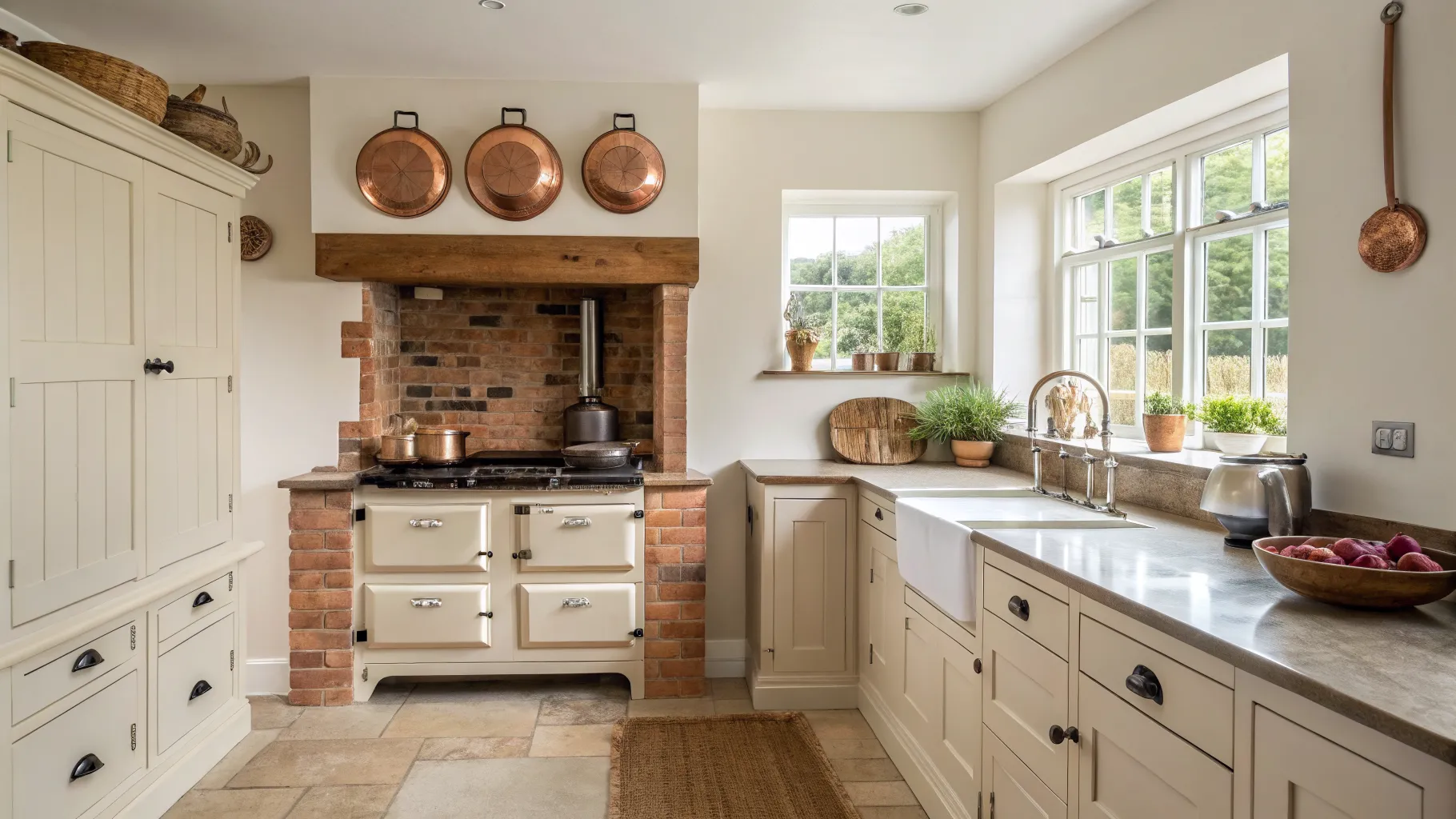
The Classic is the archetypal Rangemaster: the softly traditional face that suits a shaker or cottage kitchen. It comes in 90, 100 and 110cm and in the widest spread of fuel types, including natural gas, LPG, dual fuel and all electric, so it is the most flexible starting point. The Classic Deluxe dresses the same body in richer colours and brass or chrome trim for a more premium, period feel. If your kitchen leans traditional, start here. It pairs naturally with the looks in our cottage and traditional kitchen ideas.
Elise
The Elise is the contemporary counterpart to the Classic. Same core sizes of 90, 100 and 110cm, but a cleaner, curvier face and a big palette of colours, from Cherry Red and Mineral Green to Stone Blue and Slate. Choose it if you want the range format without the country-cottage styling.
Kitchener
The Kitchener is the pared-back, semi-professional option: flat, honest lines in Stainless Steel, Black or Cream, in 90, 100 and 110cm, offered in dual fuel and ceramic. It is the choice for people who want function and a no-nonsense look rather than decorative flourish.
Professional Plus and Professional Deluxe
The Professional collections are the commercial-kitchen look brought home: bold, boxy, statement cookers. Professional Plus is the workhorse version, while Professional Deluxe adds a sleeker finish and a choice of shades such as Slate, Charcoal Black and Cranberry, in 90, 100 and 110cm, in dual fuel or induction. Pick these if you want your range to look like the heart of a serious kitchen.
Toledo+
The Toledo+ blends modern and traditional cues, with long linear handles, teardrop control knobs and rounded door edges. It is dual fuel and comes as a 90cm with a five-burner hob or a 110cm with a six-burner hob, including a powerful multi-ring burner for wok and high-heat cooking. A good middle ground if the Classic feels too period and the Professional too industrial.
Nexus and the premium ranges
Rangemaster’s Nexus and other flagship collections sit at the top of the price ladder, with the most refined finishes and features. Worth a look if budget is not the deciding factor, but for most kitchens one of the collections above will fit better.
How to choose the right Rangemaster
Work through it in this order and the choice gets simple:
- Width first. Measure your gap. That decides 90, 100 or 110cm before anything else.
- Fuel second. Do you want gas control (dual fuel), the efficiency and clean lines of induction, or all electric because you have no gas? This narrows the collections available to you.
- Style third. Traditional (Classic or Classic Deluxe), contemporary (Elise), semi-professional (Kitchener), statement (Professional), or a blend (Toledo+).
- Colour and trim last. Only once the practical choices are made should you agonise over Regal Blue versus Royal Pearl.
Specifications, colours and the exact models on sale change from year to year, so confirm the current options on the official Rangemaster website before you commit, and check installation requirements, especially ventilation and electrical supply for the larger dual fuel and induction models.
Frequently asked questions
What does the 90 or 110 mean on a Rangemaster cooker? It is the width in centimetres. A 90 is the compact range size with usually one oven and a grill, while a 110 is the large size with two ovens and a wider hob. There is also a 100cm middle option on many collections. Measure your worktop gap first, because the width decides everything else.
Which Rangemaster collection is the most traditional? The Classic, and its dressier sibling the Classic Deluxe, have the softly traditional styling that suits shaker, cottage and country kitchens. The Elise is the modern-looking alternative, and the Professional collections are the boldest, most commercial-looking of the range.
Is dual fuel or induction better on a Rangemaster? Dual fuel pairs a gas hob with electric fan ovens and suits cooks who want a live flame. Induction gives a faster, more precise and easier-to-clean hob and is more energy efficient, but needs induction-compatible pans and a suitable electrical supply. Neither is simply better; it depends on how you cook and whether you have gas.
Are Rangemaster cookers made in the UK? Yes. Rangemaster builds its range cookers in Leamington Spa in England, and the company traces its range-making back to 1830, which is a large part of the brand’s appeal to British buyers.
What size range cooker do I need? Match the width to your kitchen and your cooking. A 90cm suits smaller kitchens and lighter cooking, a 110cm suits bigger kitchens and households that batch-cook or entertain and want twin ovens. Always confirm you have the physical gap plus room for ventilation and door clearance before choosing.