Fuel Types and Running Costs
Energy Price Cap October 2026: Range Cooker Costs per Hour

By the Hill & May team
Updated 2026
The energy price cap for October 2026 runs from 1 October to 31 December and sets the rates most British households will pay to cook this quarter: 7.97p per kWh for gas and 26.32p per kWh for electricity, on Direct Debit, averaged across England, Scotland and Wales. Ofgem puts the typical dual fuel bill at £1,723 a year, up 4 per cent. This page turns those two numbers into what an hour on a range cooker actually costs, burner by burner and oven by oven, so you can see where the money goes before the cold months.
For the full-year picture, with ovens, hobs and heat-storage cookers costed side by side, see range cooker running costs. To put in your own usage, use the running cost calculator.
The rates, and what changed from the summer
| Direct Debit, GB average | July to September 2026 | October to December 2026 |
|---|---|---|
| Electricity unit rate | 26.11p per kWh | 26.32p per kWh |
| Electricity standing charge | 57.19p a day | 54.83p a day |
| Gas unit rate | 7.33p per kWh | 7.97p per kWh |
| Gas standing charge | 29.04p a day | 29.68p a day |
Source: Ofgem, energy price cap unit rates and standing charges.
Two details in that table change how a range cooker owner should read it.
Gas went up far more than electricity. The gas unit rate rose by about 9 per cent quarter on quarter; Ofgem attributes the increase to higher wholesale gas prices linked to the conflict in the Middle East. The electricity unit rate rose by less than 1 per cent.
Electricity only looks flat because the VAT came off. From 1 October 2026 to 31 March 2027 there is no VAT on domestic electricity, while gas still carries 5 per cent. The summer rate of 26.11p included VAT; take that out and it was about 24.9p, so the underlying electricity price has risen too. The VAT holiday is hiding it, and it ends on 31 March.
The upshot for cooks: gas is now 3.3 times cheaper per unit than electricity, against 3.6 times in the summer. Gas cooking is still cheaper, but by a smaller margin than at any point this year.
What an hour on each burner and zone costs
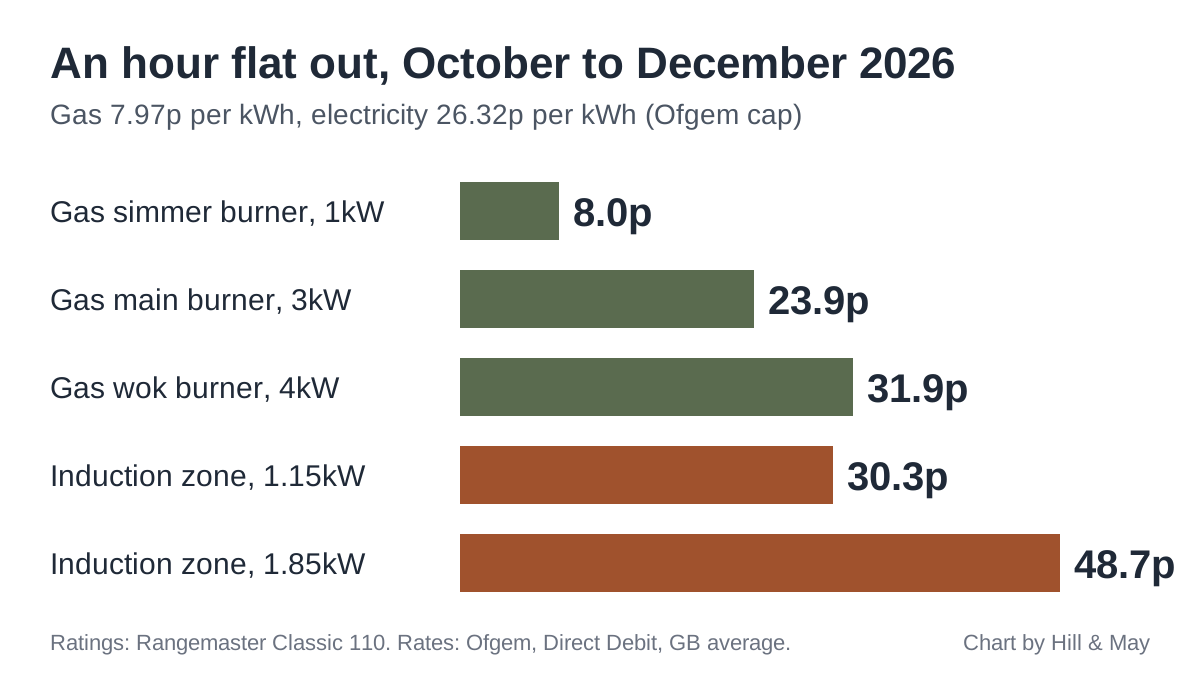
The ratings below are Rangemaster’s published figures for the Classic 110, which is a fair stand-in for most 110cm range cookers. The all gas model has burners of 4kW, 3kW (two), 1.7kW (two) and 1kW, and a 2.73kW gas grill. The induction model has three zones of 1.85kW, two of 1.15kW, and a boost setting of up to 3kW on one zone.
An hour at full output, at October 2026 rates:
| Burner or zone | Rating | Cost per hour, flat out |
|---|---|---|
| Gas wok burner | 4kW | 31.9p |
| Gas main burner | 3kW | 23.9p |
| Gas medium burner | 1.7kW | 13.5p |
| Gas simmer burner | 1kW | 8.0p |
| Gas grill | 2.73kW | 21.8p |
| Induction zone, maximum | 1.85kW | 48.7p |
| Induction small zone, maximum | 1.15kW | 30.3p |
| Induction boost | 3kW | 79.0p (13.2p for 10 minutes) |
Read this as a ceiling, not a typical bill. Nobody runs a pan at full power for an hour; a simmer on induction might draw a fifth of the zone’s rating. The per-hour figure is useful for one thing: it shows how much more each kWh of electricity costs, which the table makes plain.
What it does not show is efficiency. A gas flame sends a large share of its heat round the sides of the pan, while induction puts most of it into the base. Per job done, the gap narrows.
What a single task costs this quarter
Pricing the job, rather than the hour, is the fairer comparison:
- Boiling two litres of water from the tap: about 4p on gas and about 6p on induction. Induction uses less than half the energy, but each unit costs 3.3 times as much.
- One oven session: Rangemaster’s declared energy-label figures are 1.61kWh per test cycle for a gas oven and 0.83kWh for an electric one. That is 12.8p for gas and 21.8p for electric per session. The gas oven burns nearly twice the energy and still costs less.
- The gas grill for 15 minutes: about 5.4p.
The working for these and the hob efficiency assumptions are in induction vs gas range cookers and the running costs page, so we have not repeated them here.
A conventional range cooker over the whole quarter
At five oven sessions a week and three two-litre boils a day, our full-year model comes out at about £76 for an all gas range cooker, £100 for dual fuel and £124 for electric or induction. Divided across the 13 weeks to 31 December, that is roughly:
- All gas: about £19 for the quarter
- Dual fuel: about £25
- Electric or induction: about £31
The standing charges are the bigger number. Over the 92 days of this cap period, electricity’s standing charge comes to about £50 and gas about £27, whether you cook or not. If the cooker is the only gas appliance in your house, keeping the gas meter for it costs more than the gas cooking saves. The electric range cooker costs page works through that case.
Heat-storage cookers this quarter
Always-on cookers are where the October cap actually bites, because they burn energy around the clock. Using the manufacturers’ own weekly consumption figures at 26.32p per kWh, over the 92 days from 1 October to 31 December:
| Cooker | Tested use | Per day | October to December |
|---|---|---|---|
| AGA Classic (R7), three ovens, economy setting | 105kWh a week | £3.95 | about £363 |
| Everhot 90+, 100+, 110i and similar | 90kWh a week | £3.38 | about £311 |
| Everhot 60, 90i, 100i, or AGA Mini | 75kWh a week | £2.82 | about £259 |
The AGA figures are from AGA’s running costs page; Everhot’s are tested on its ECO setting with doors and lids closed. Neither includes cooking. In a cold kitchen through November and December some of that heat is doing the job your central heating would otherwise do, which is the case for running one in winter rather than summer. There is more on the model-by-model detail in AGA running costs per year, and oil-fired and LPG models are covered in off-grid range cookers.
What to do with this before January
- Do not change cooker on the strength of one quarter. A conventional range cooker’s entire running cost is around £20 to £30 for these three months. Buy on how you cook.
- If you have an always-on cooker, this is the quarter it earns its keep. Running it through the cold months and turning it off in late spring is the usual pattern.
- Watch 25 November 2026. Ofgem announces the cap for 1 January to 31 March 2027 that day. We will update the figures on this page when it does.
- Remember the spring step. When electricity VAT returns from 1 April 2027, every electric figure here rises by 5 per cent unless the underlying price falls.
Frequently asked questions
What is the energy price cap from October 2026? From 1 October to 31 December 2026 the cap is 26.32p per kWh and 54.83p a day for electricity, and 7.97p per kWh and 29.68p a day for gas, on Direct Debit as a GB average. Ofgem says a typical household using both fuels will pay £1,723 a year, 4 per cent more than in the summer.
Is cooking on gas still cheaper than electric after October 2026? Yes. Gas costs 7.97p per kWh against 26.32p for electricity, so a gas oven session costs about 12.8p against 21.8p for an electric one. The margin has narrowed, though, because gas rose about 9 per cent this quarter while electricity barely moved.
Why did electricity prices barely change in October 2026? VAT on domestic electricity has been removed from 1 October 2026 to 31 March 2027. The July to September rate of 26.11p included 5 per cent VAT; the new 26.32p does not, so the underlying price rose and the VAT cut absorbed it.
How much does it cost to run an AGA from October 2026? An AGA Classic on the economy setting uses 105kWh a week on AGA’s own figures, which is about £3.95 a day or around £363 for October to December at 26.32p per kWh. That excludes cooking.
How much does an induction hob cost per hour? At full power, a 1.85kW induction zone costs about 49p an hour at October 2026 rates. In practice you rarely run a zone flat out, and boiling two litres of water costs about 6p.
When is the next price cap announced? Ofgem announces the cap for 1 January to 31 March 2027 on 25 November 2026.