Buying Guides
Kitchen Sink Types Compared: Composite, Granite, Copper and More

By the Hill & May team
Updated 2026
The sink is the hardest-working part of a kitchen, so the material you choose matters more than the shape or the colour. A composite material sink behaves very differently from a ceramic one, and a copper sink asks for a level of care a stainless steel sink never will. This guide compares the main kitchen sink types the way they actually live in a country kitchen, so you can match the material to how you cook and clean rather than to a showroom photo.
Composite (granite and quartz composite)
Composite sinks are made from crushed granite or quartz bound with resin, and they have become the default choice in busy family kitchens for good reason. A granite composite sink is quiet under running water, resists scratches and heat well, and hides the odd knock in its matte, stone-like finish. With normal care, rinsing daily and wiping dry, a good one can last decades.
The trade-offs are weight and upkeep. Composite is heavy, so it needs solid cabinet support, and darker colours can show cloudy water spots or white limescale marks if you have hard water and let it dry unwiped. A quick wipe after washing up keeps it looking its best.
- Best for: busy family kitchens that want durability and a soft, modern look.
- Watch out for: limescale marks on dark colours in hard-water areas.
Ceramic and fireclay
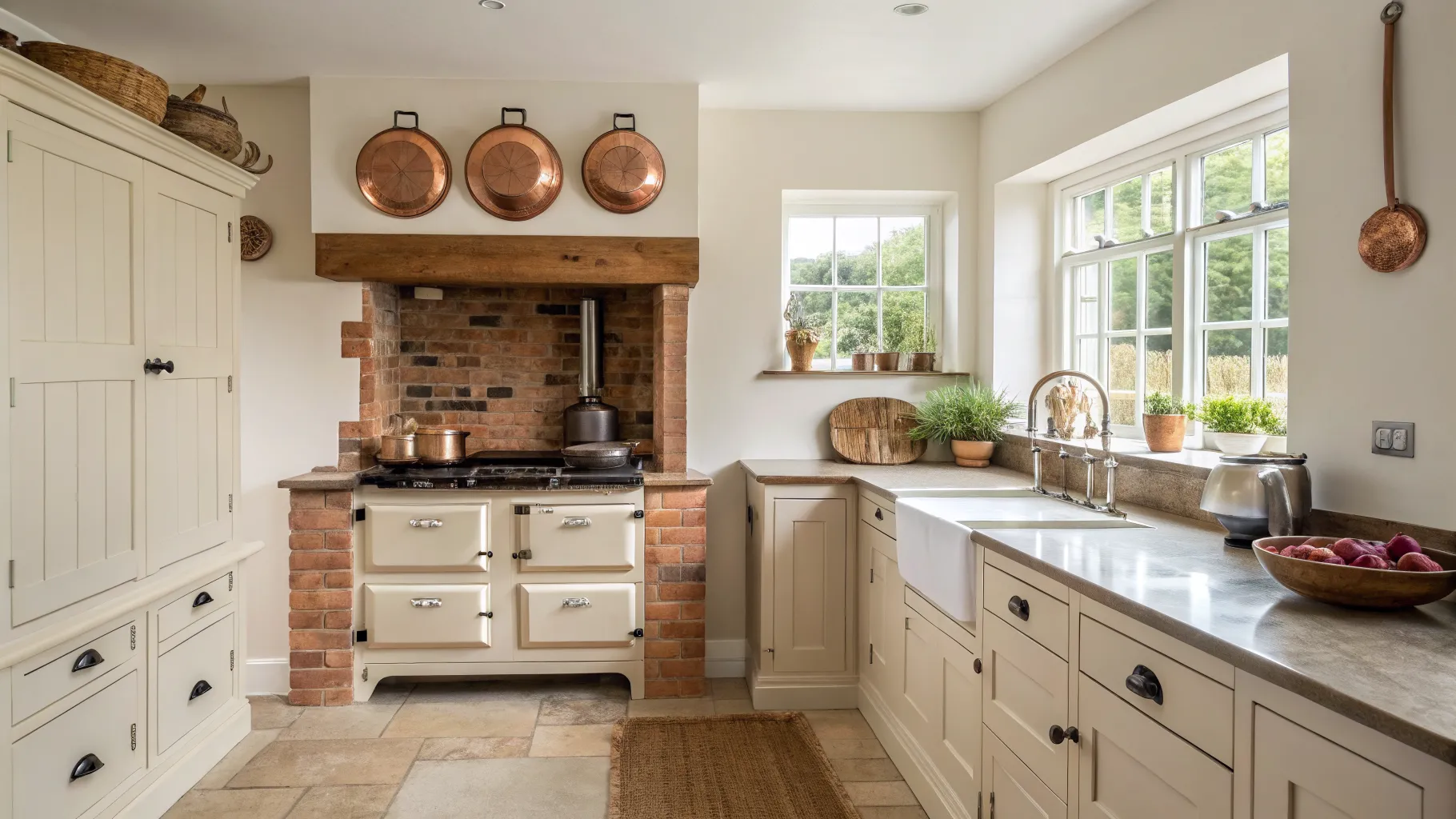
Fireclay and ceramic sinks, including the classic Belfast sink, are the traditional country-kitchen choice. The fired, glazed surface is non-porous, so it resists stains, will not rust, and wipes clean with mild soap. It handles heat and looks the part in a cottage or shaker kitchen. Fireclay is also quiet.
Its one real weakness is chipping: drop a heavy pan and the hard glaze can crack. It is also heavy and, in a farmhouse apron-front style, usually needs the cabinet altered to take it. If you love the look, see our Belfast sink buying guide for the fitting detail.
- Best for: traditional, cottage and shaker kitchens.
- Watch out for: chips from dropped pans, and the weight.
Stainless steel
Stainless steel is the practical all-rounder: affordable, light, easy to source in almost any size, and simple to fit as an inset or undermount sink. It shrugs off heat and stains, and it is the most hygienic surface of the lot. For most homeowners it is the sensible default.
The downsides are cosmetic. Thin, cheap steel can be noisy and dents easily, and every stainless sink shows water spots and fine scratches over time. Buy a thicker gauge with sound-dampening pads underneath and wipe it dry to keep watermarks down.
- Best for: hard-working kitchens on a sensible budget, and utility or boot rooms where a tough utility sink earns its keep.
- Watch out for: thin gauges that dent and rattle. Pay for thickness.
Copper and metal finishes
A copper sink is a statement piece. It develops a living patina over time, has natural antimicrobial properties, and brings real warmth to a country kitchen. Brass and gold-toned sinks do a similar job for anyone chasing a warmer metal than steel.
Copper is soft, though, so it marks and needs consistent care to keep or evenly age its finish, and it sits at the premium end on price. A gold or brass finish sink is really a design choice rather than a workhorse, so go in knowing you are buying looks as much as function.
- Best for: feature sinks in a design-led kitchen.
- Watch out for: the ongoing maintenance, and the cost.
Inset, undermount or Belfast?
Material is only half the decision. The mounting style matters too:
- Inset (or drop-in) sink: sits in a cut-out in the worktop with a visible rim. Cheapest and easiest to fit, and works with almost any worktop.
- Undermount sink: fixed below the worktop for a clean edge you can sweep crumbs straight into. Needs a solid, water-resistant worktop.
- Belfast or butler sink: a deep apron-front sink that sits proud of the cabinet, the classic farmhouse look.
Think about size honestly too. A large single bowl suits anyone who washes big roasting trays; a small kitchen sink or a one-and-a-half bowl makes better use of tight runs. Match the sink to your kitchen base units so the cabinet underneath can carry the weight.
Which sink material should you choose?
- Composite if you want a quiet, durable, modern sink and will wipe it dry in a hard-water area.
- Ceramic or fireclay for a traditional country look, accepting the chip risk.
- Stainless steel for the best value and a fuss-free, hygienic surface.
- Copper or a gold finish if you want a feature piece and will maintain it.
Whatever you pick, buy from an established brand such as Franke or Blanco, check the bowl depth against your taps, and confirm your worktop and cabinet can take the weight. For the wider look, browse our cottage and traditional kitchen ideas.
Frequently asked questions
Is a composite material sink better than stainless steel? It depends on the kitchen. A composite material sink is quieter, hides scratches better and has a softer, stone-like look, which suits a busy family kitchen. Stainless steel is cheaper, lighter, more hygienic and easier to replace. Composite wins on looks and noise, stainless on value and simplicity.
Do composite and granite sinks show limescale? Darker composite and granite sinks can show white limescale marks and cloudy water spots in hard-water areas, especially if left to dry unwiped. A quick wipe after washing up prevents most of it, and an occasional gentle descale keeps the finish even.
Are ceramic and Belfast sinks prone to chipping? The glazed surface is very hard and stain-resistant, but it can chip if you drop a heavy pan into it. A protective grid mat in the base of the bowl reduces the risk and also protects the glaze from scratches.
What is the most low-maintenance kitchen sink? Stainless steel and fireclay are the most forgiving day to day. Stainless wipes clean and never stains, though it shows watermarks; fireclay’s glaze resists stains and rust and needs only a mild soap. A copper or gold-finish sink needs the most upkeep.
Should I choose an inset or undermount sink? An inset sink is cheaper, easier to fit and works with any worktop. An undermount sink gives a cleaner edge you can wipe crumbs straight into, but it needs a solid, water-resistant worktop such as stone or quartz. Choose based on your worktop and budget.
What size kitchen sink do I need? Match the sink to how you cook and the space you have. A large single bowl suits anyone washing big trays and pans; a one-and-a-half or small kitchen sink makes better use of a short run of units. Always check the bowl fits your cabinet and leaves room for your tap.