Buying Guides
Cottage Kitchen Ideas: Classic Looks for Older British Homes
By the Hill & May team
Updated 2026
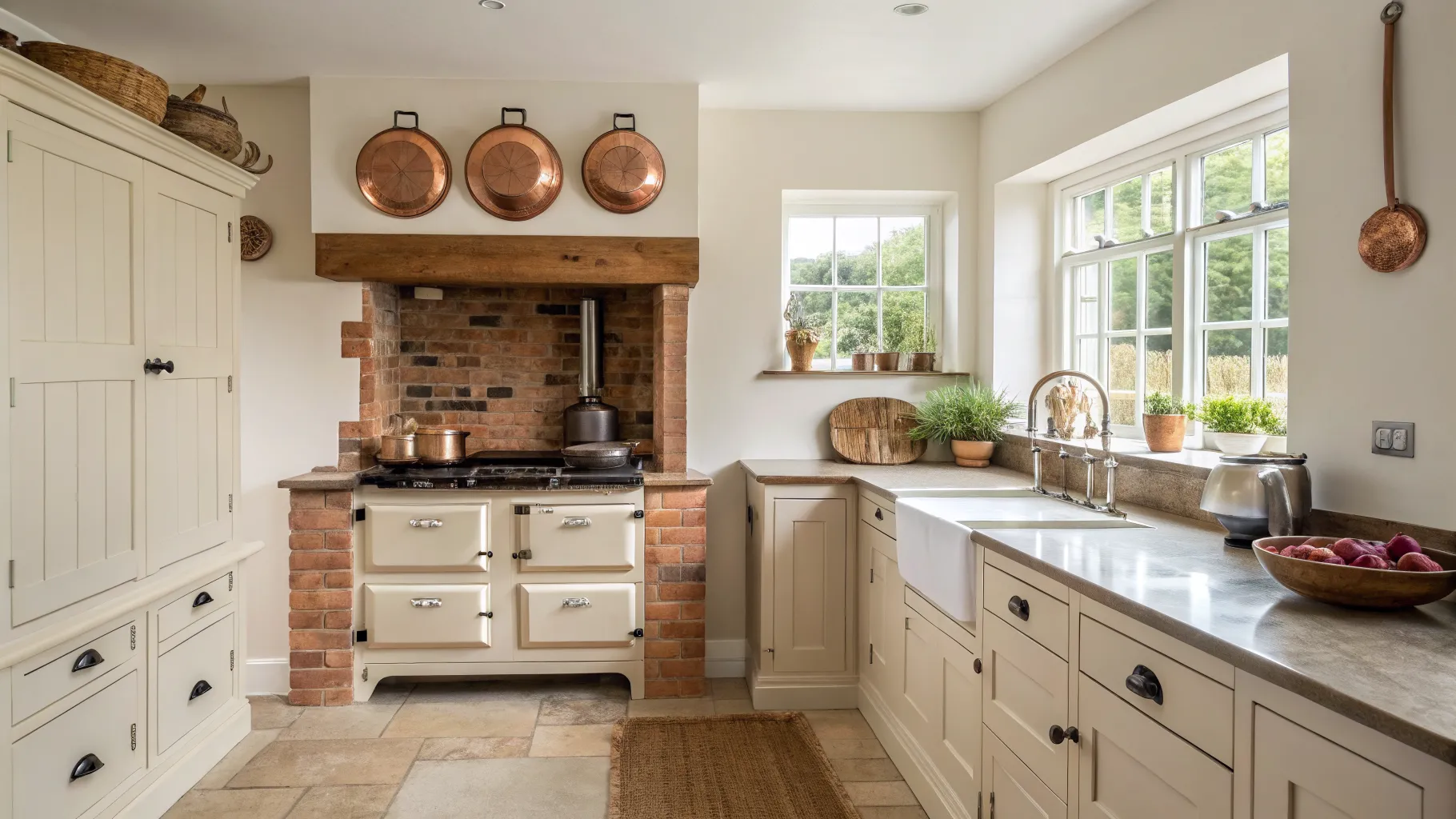
A cottage kitchen is the look most older British homes were quietly built for: warm, lived-in, full of natural materials and honest workmanship. If you have a period cottage, a Victorian terrace or simply a room with low ceilings and uneven walls, chasing a sleek modern fit-out usually fights the house. Leaning into a cottage kitchen instead works with the bones of the building and ages far more gracefully. These ideas cover the colours, materials and fixtures that make the style feel authentic rather than themed, with honest notes on what suits a real working kitchen.
We review range cookers for exactly these rooms, so where a fixture deserves its own deep dive, there is a link to it.
1. Start with warm, muted colour
The quickest way to make a kitchen read as a cottage rather than a showroom is the palette. Cool greys and stark whites can feel clinical under the softer light of an older home. The colours that consistently work are creams, soft whites, sage and other muted greens, heritage blues and earthy, putty-like neutrals. These sit comfortably against exposed brick, timber and stone, and they flatter the warm glow of a range rather than fighting it.
A useful trick in a low or dark room: paint the walls and units in tones from the same warm family rather than going high-contrast. The eye reads it as calm and cohesive, which makes a small cottage kitchen feel larger, not busier.
2. Choose shaker cabinetry
If there is one cabinet style that defines the cottage kitchen, it is the shaker door: a simple five-piece frame with a recessed flat panel, no fuss, no gloss. It takes its name from the Shaker communities who prized plain, well-made furniture, and that restraint is exactly why it never dates. Painted shaker units in one of the muted colours above are the backbone of the look.
Pair them with traditional handles in pewter, aged brass or copper rather than sleek bar handles, and the period feel falls into place. Our shaker kitchen guide goes deeper on choosing and finishing them.
3. Fit a Belfast or butler sink
Few things say cottage kitchen like a deep ceramic Belfast sink set under a window. The generous single basin is genuinely practical for washing roasting trays and large pans, and the simple white glaze suits almost any colour scheme. A Belfast sink has a built-in overflow; the closely related butler sink traditionally does not, which is the main thing to check when you buy.
It is a fixture worth getting right because swapping it later means cabinetry work, so read our Belfast sink buying guide before you commit to a size and tap arrangement.
4. Make the range cooker the centrepiece
The range cooker is the heart of the British country kitchen, and a cottage room is where it makes the most sense. A cream, sage or claret range anchors the space visually and earns its keep on the cold mornings these houses are famous for. Cast-iron heat-storage models in the AGA tradition double as gentle background heating, while modern dual-fuel ranges give you the look with everyday convenience and easier control.
Pick the type to match how you actually cook and heat the room, not just the aesthetic. Our range cooker buying advice walks through the trade-offs, and we review specific models elsewhere on the site.
5. Bring in natural materials
Cottage kitchens are built from things that wear well and look better with age. The materials that carry the style:
- Timber worktops in oak or beech, oiled rather than lacquered, so small marks sand out instead of building up.
- Stone or slate for floors and splashbacks, hard-wearing and quietly handsome.
- Exposed brick or original beams where the house already has them; restored rather than hidden.
You do not need all of these. One or two genuine natural surfaces against painted units is enough to set the tone without the room feeling like a stage set.
6. Use open shelving and a dresser
Where modern kitchens hide everything behind doors, the cottage look earns its character from a little honest display. A run of open shelving or a freestanding dresser showing everyday crockery, jugs and well-used cookware adds the lived-in warmth that defines the style. Keep it to pieces you actually use so it reads as a working kitchen rather than a prop shelf.
Glass-fronted wall cabinets are a tidier compromise if open shelves feel like too much dusting.
7. Add a larder for proper storage
Older homes rarely came with banks of fitted units, and a larder is the period-correct answer. A tall larder cupboard, or a small walk-in one if you have the space, keeps dry goods cool and accessible and reduces the need for wall cabinets that can crowd a low room. A cold larder on a north wall is a genuinely useful feature in a cottage, not just a nostalgic one.
Making it work in a real room
The honest part: cottage kitchens suit period rooms, but they still have to function. Low ceilings limit tall units, uneven walls make fitted runs tricky, and reclaimed materials need sealing to survive daily use. Plan around the room you have rather than forcing a symmetrical layout into a building that was never square. The 2026 mood is firmly on the side of warm, characterful, classic kitchens, so this is one trend that should still look right in twenty years.
Frequently asked questions
What makes a cottage kitchen different from a modern kitchen? A cottage kitchen leans on warm muted colours, natural materials like timber and stone, shaker cabinetry, and traditional fixtures such as a Belfast sink and a range cooker. Where a modern kitchen prizes flat, glossy minimalism, a cottage kitchen is deliberately lived-in and handcrafted in feel, which suits the proportions and light of older British homes.
What colours suit a cottage kitchen? Soft creams and whites, sage and muted greens, heritage blues and earthy neutrals all work well. They flatter the warmer light of period rooms and sit comfortably against brick, timber and stone. In a small or dark room, keeping walls and units in tones from the same warm family makes the space feel calm and larger.
Do I need a range cooker for a cottage kitchen? No, but it is the classic centrepiece and suits the style well. A heat-storage range can gently warm the room, while a modern dual-fuel range gives the look with easier everyday control. Choose based on how you cook and whether you want the cooker to contribute heat, not on appearance alone.
Is a cottage kitchen practical for everyday use? Yes, if you plan around the room. Timber worktops, stone floors and a deep Belfast sink are hard-wearing, and a larder adds real storage. The main constraints in older homes are low ceilings and uneven walls, so work with the building rather than forcing a rigid fitted layout into it.
What is the difference between a Belfast and a butler sink? Both are deep ceramic sinks suited to a cottage kitchen. The traditional difference is that a Belfast sink includes a built-in overflow, while a classic butler sink does not. Check which you are buying, as it affects the tap and waste arrangement.
The takeaway
A cottage kitchen is less a shopping list than a set of choices that respect an older home: warm colour, shaker units, natural materials and a few honest fixtures like a Belfast sink and a range cooker. Get those right and the room feels like it has always been there, which is exactly the point.