Buying Guides
Freestanding Kitchen Units: The Best Standalone Kitchen Furniture
By the Hill & May team
Updated 2026
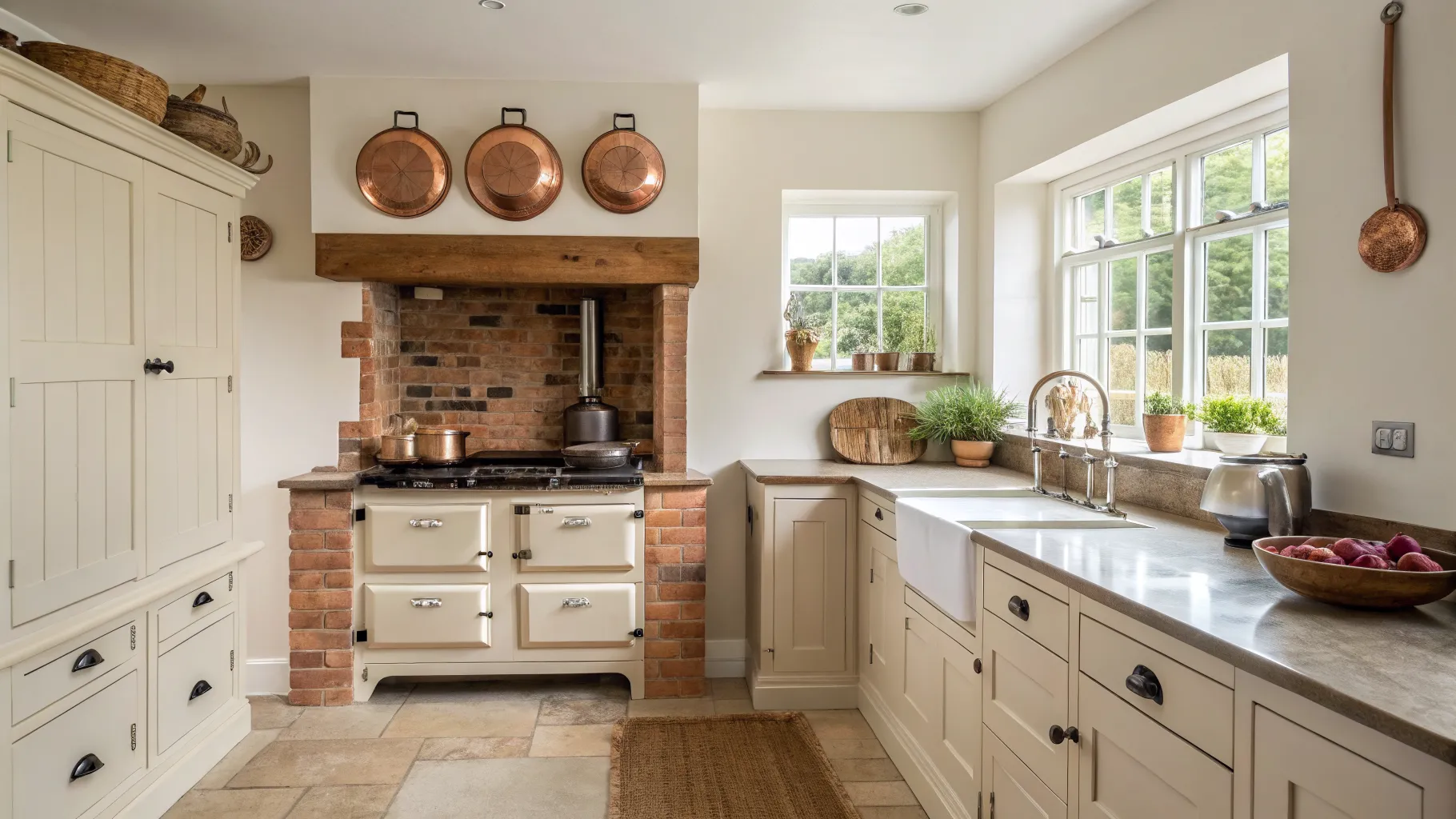
Freestanding kitchen units are having a proper revival, and not just for nostalgia. A fitted kitchen locks you into one layout for twenty years; freestanding kitchen furniture lets you move, add to and take pieces with you when you go. For a country cottage, a period home with wonky walls, or anyone who wants a kitchen that looks collected rather than installed, standalone pieces are often the smarter choice. Below: the main types, what they cost from two very different makers (prices read 4 October 2026), freestanding country kitchen ideas that work in real rooms, and how to plan a mix of freestanding and fitted.
Why choose freestanding kitchen units
The appeal comes down to flexibility. A dresser, larder or island can be repositioned when you change how you use the room, added to gradually as budget allows, or even loaded onto a van and taken to your next house. That suits period and character properties, where fitted runs fight against uneven walls and old floors, and it is a more sustainable, long-term buy than a kitchen you rip out in a decade.
There are trade-offs. Freestanding pieces usually cost more per unit than flat-pack fitted cabinets, and you lose the seamless run of worktop a galley or L-shaped layout gives you. Most real country kitchens end up as a hybrid: a short fitted run for the sink and hob, then freestanding furniture around it.
The main types of freestanding kitchen furniture
Dressers. The classic country piece: a base of drawers and cupboards topped with open or glazed shelving for crockery, jars and glassware. A dresser is often the visual anchor of the room and the single item people buy first.
Larder and pantry cupboards. Tall standalone cupboards fitted out with shelves, spice racks and sometimes drawers, keeping dry goods cool and tidy. They do the job of several wall units in one handsome piece. If you are weighing fitted alternatives, our tall kitchen units guide compares larder towers.
Islands and butcher’s blocks. A freestanding island gives you prep space and storage in the middle of the room. Solid-wood butcher’s blocks add a hard-wearing chopping surface, and many come on castors so they double as a movable trolley.
Base sideboards and prep units. Lower cabinets that sit against a wall to provide worktop and storage without the built-in look, ideal under a window where wall units would block the light.
Freestanding sink units. A unit built to house a Belfast or butler sink, the most traditional way to plumb a country kitchen without a fitted run.
What freestanding kitchen units cost in 2026
Prices vary more than with fitted kitchens, because you are buying furniture rather than carcasses. Two ends of the market, from the makers’ own sites on 4 October 2026:
| Piece | Maker | Size (w x h x d) | Price |
|---|---|---|---|
| TORNVIKEN kitchen island, off-white and oak | IKEA | 126 x 77 cm top | £379 |
| VADHOLMA kitchen island, black and oak | IKEA | 79 x 63 x 90 cm | £429 |
| VADHOLMA kitchen island, black and oak | IKEA | 126 x 79 x 90 cm | £579 |
| BEKVÄM kitchen trolley, beech | IKEA | 58 x 50 cm | £69 |
| Upright Cupboard, Shaker range | deVOL | 600 x 1700 x 468 mm | £2,250 |
| Curiosity Cupboard, Shaker range | deVOL | 735 x 2100 x 480 mm | £2,440 |
| Open Larder with 26mm oak top, Shaker range | deVOL | 1465 x 2100 x 620 mm | £3,200 |
| Closed Larder with 26mm oak top, Shaker range | deVOL | 1465 x 2100 x 620 mm | £3,340 |
| Freestanding Counter, drawers and open storage, Haberdasher’s range | deVOL | 2050 x 900 x 500 mm | £3,860 |
| Freestanding Pantry with panel doors, Haberdasher’s range | deVOL | 900 x 2105 x 477 mm | £5,550 |
| Freestanding Pantry with tambour doors, Haberdasher’s range | deVOL | 1100 x 2105 x 477 mm | £7,820 |
A few details from deVOL’s catalogue pages that change the real cost: the Shaker larders arrive in two halves and need some assembly, cornice and end panels are extra (£100 for base cabinets, £80 for countertop cupboards), a stone top instead of oak adds roughly £500 to £600 (the Closed Larder is £3,870 with honed black granite and £3,930 with Carrara marble), and the dot or petal door cut-outs are £75 a door. A panelled back on a Haberdasher’s counter, so it can stand in the middle of the room as an island, is another £760. deVOL’s smallest freestanding island with a Belfast sink is £9,820 (2000mm wide, painted), and that excludes the sink, taps, worktop and dishwasher.
The IKEA pieces are flat-pack and self-assembly, and none of them is designed to take a sink. Between the two sits reclaimed furniture, where an old pine dresser base or school cupboard often costs less than the IKEA island but needs a new top and some levelling.
Sources: IKEA UK kitchen islands and trolleys; deVOL Shaker freestanding cupboards, Haberdasher’s freestanding pantries and freestanding counters, all read 4 October 2026. Prices change, so check before you order.
Freestanding country kitchen ideas
Free standing kitchen ideas that hold up in a working country kitchen, rather than just in a photo shoot:
- Fit the wet and hot zones, free the rest. Keep a short fitted run for the sink, dishwasher and range cooker, where plumbing and gas pin things down, and make everything else furniture. This is the most common freestanding country kitchen layout because it costs less and survives a house move.
- Let one tall piece do the work of the wall units. A 2.1m larder or pantry holds what four or five wall cupboards would, and leaves the walls free for a window, open shelves or a plate rack. In a cottage with low beams, check the ceiling height first: deVOL’s larders stand 2100mm before the cornice.
- Use a counter or old shop counter as the island. A long, shallow counter (deVOL’s is 500mm deep) gives prep space without the bulk of a 900mm-deep fitted island, which matters in a narrow farmhouse kitchen. Leave at least a metre of walkway on the working side.
- Put the trolley next to the cooker. A butcher’s block or trolley on castors beside the range gives a landing spot for hot pans and rolls out of the way when the room fills up.
- Mix finishes on purpose. Painted cupboards with an oak or stone top, next to a natural wood dresser, look collected. Matching every piece makes a freestanding kitchen look like a fitted one with gaps.
- Raise everything off the floor. Furniture on legs or plinths with a visible gap underneath reads as freestanding, makes uneven flagstone floors easier to deal with, and lets you see the floor run under it, which makes a small room feel bigger.
- Scribe to the floor, not the wall. In an old house the floor is rarely level. Pieces with adjustable or scribed feet sit square without being fixed to a wonky wall; deVOL scribes its larder feet to the floor before fitting the top half.
What to look for when buying
- Solid wood over veneer. Oak, pine and painted hardwood age well and can be sanded and repainted. The best pieces are handmade in the UK and last generations.
- Real worktop thickness. A chunky solid-wood or stone top reads as country and survives daily use. Thin tops on cheaper units chip and mark.
- Storage that earns its space. Look for deep drawers on runners, adjustable shelves and cupboards sized for your crockery, not just for the look.
- Castors where you want to move things. An island trolley on lockable wheels is far more useful than a fixed one in a small kitchen.
- Height that matches your worktop. Aim for freestanding prep surfaces around 900mm high so they sit level with any fitted run. Our kitchen cabinet sizes reference gives the standard dimensions.
Planning a freestanding or hybrid kitchen
Start with the fixed points that need plumbing and gas: the sink and the cooker. Many people build a short fitted run around those (or use a dedicated freestanding sink unit) and then place freestanding furniture for everything else. Leave breathing space around each piece so it reads as furniture rather than a squeezed-in cabinet, and vary the heights: a tall larder, a mid dresser and a low island give a room the layered, gathered-over-time look that defines a good country kitchen.
Mixing woods and painted finishes is fine and even desirable here; a sage or off-white painted dresser next to a natural oak island is a classic country pairing. For more on the overall style, see our cottage and traditional kitchen ideas.
Where to buy freestanding kitchen units in the UK
Bespoke and semi-bespoke British makers such as deVOL, The Freestanding Kitchen Company, Roseland Furniture and various solid-wood workshops build dressers, larders and islands to size, often in your choice of paint colour. For lower budgets, IKEA and high-street furniture ranges offer freestanding-style islands and cabinets, and the second-hand and reclaimed market (auction houses, salvage yards and vintage dealers) is a rich source of genuine old dressers and pine cupboards that suit a period kitchen. Check current prices directly with makers, since solid-wood pieces are quoted by size and finish.
Whichever route you take, buy the anchor piece (usually the dresser or island) first, live with it, then add larders and prep units as you go. That is the whole point of freestanding: you are never locked in.
Frequently asked questions
What are freestanding kitchen units? They are standalone pieces of kitchen furniture, such as dressers, larders, islands and sink units, that are not fixed to the wall or built in. You can move them, add to them and take them with you, unlike a fitted kitchen.
Are freestanding kitchens more expensive than fitted? Usually more per piece, especially solid-wood or bespoke furniture, but you can spread the cost by buying one item at a time. Reclaimed and vintage pieces can make a freestanding kitchen cheaper than a full fitted refit.
Can you mix freestanding and fitted kitchen units? Yes, and most country kitchens do. A short fitted run around the sink and cooker, with freestanding dressers, larders and islands elsewhere, is the most practical and popular approach.
What is the best wood for freestanding kitchen furniture? Solid oak and pine are the classic choices: hard-wearing, easy to repair and able to be sanded and repainted. Painted hardwood units also suit country kitchens and can be refreshed in a new colour later.
Do freestanding kitchen units suit small kitchens? They can, if you choose compact pieces and use islands or trolleys on castors that move out of the way. In a very small kitchen a couple of well-chosen freestanding units can be more flexible than a cramped fitted run.
How much does a freestanding kitchen cost? It depends on how many pieces you buy. A freestanding island starts at £379 at IKEA (October 2026), while a single handmade larder from a British maker such as deVOL runs from about £3,200 to £3,900 depending on the top. At deVOL’s list prices, a Closed Larder (£3,340), a Freestanding Counter (£3,860) and its smallest Belfast sink island (£9,820, before the sink, taps, worktop and dishwasher) come to just over £17,000; reclaimed pieces bring that down sharply.
What are good freestanding country kitchen ideas for a small room? Choose one tall larder instead of wall units, a shallow counter (around 500mm deep) instead of a full island, and a trolley on castors that can be moved out of the way. Pieces on legs make a small floor look larger.
Can you have a freestanding sink unit? Yes. A freestanding sink unit built to house a Belfast or butler sink is a traditional way to plumb a country kitchen, though the plumbing itself is fixed once installed, so plan its position carefully.