Buying Guides
Kitchen Island Lighting Ideas: Pendants, Spotlights and Chandeliers

By the Hill & May team
Updated 2026
Good kitchen island lighting does two jobs at once: it lights the worktop you actually prep on, and it anchors the room visually. Get it right and the island becomes the heart of the kitchen; get the height or the number of lights wrong and it either dazzles you over the chopping board or looks lost under the ceiling. This guide runs through the kitchen island lighting ideas worth considering, from classic pendants to linear chandeliers and discreet spotlights, and gives you the UK sizing rules so you can plan with confidence rather than guesswork.
Start with the numbers: how many lights
The single most common mistake is hanging the wrong number of pendants for the island length. The reliable rule of thumb, measured against the island’s usable worktop length:
- Up to 120cm: one central pendant, or a single small linear light.
- 120cm to 180cm: two pendants, or one linear chandelier.
- 180cm to 240cm: three pendants, or one long linear fitting.
- Over 240cm: three widely spaced pendants or five mini pendants; over about 300cm, five pendants or a grand linear piece.
Designers lean towards odd numbers, one, three or five, because a middle light gives the eye a natural centre point and the arrangement feels balanced. Two pendants are the exception that works because they sit symmetrically either side of centre.
Get the hanging height right
Height is what separates a professional-looking result from a DIY one. Hang pendants so the bottom of the shade sits 75cm to 90cm above the island surface, with 80cm to 85cm being the practical standard for a typical UK kitchen with a 2.4m to 2.7m ceiling. That clearance lights the worktop without blocking sightlines across the room or leaving a tall cook ducking. If your ceiling is higher, raise the fittings a little to keep them in proportion, roughly 7cm more for every extra 30cm of ceiling height. The Lighting Company and UK makers such as Jim Lawrence publish similar figures, so if in doubt, hang, live with it for a day, then fine-tune the drop.
Space them evenly
For two or three pendants, keep the gaps equal across the whole island rather than bunching them in the middle. Aim for 60cm to 75cm centre to centre, and leave a sensible margin, around 15cm or more, between the end of the island and the centre of the outermost light. Mark the positions with masking tape on the worktop before your electrician commits, and stand back to check the spacing reads evenly from the main doorway.
Idea 1: A row of pendants for a classic country look
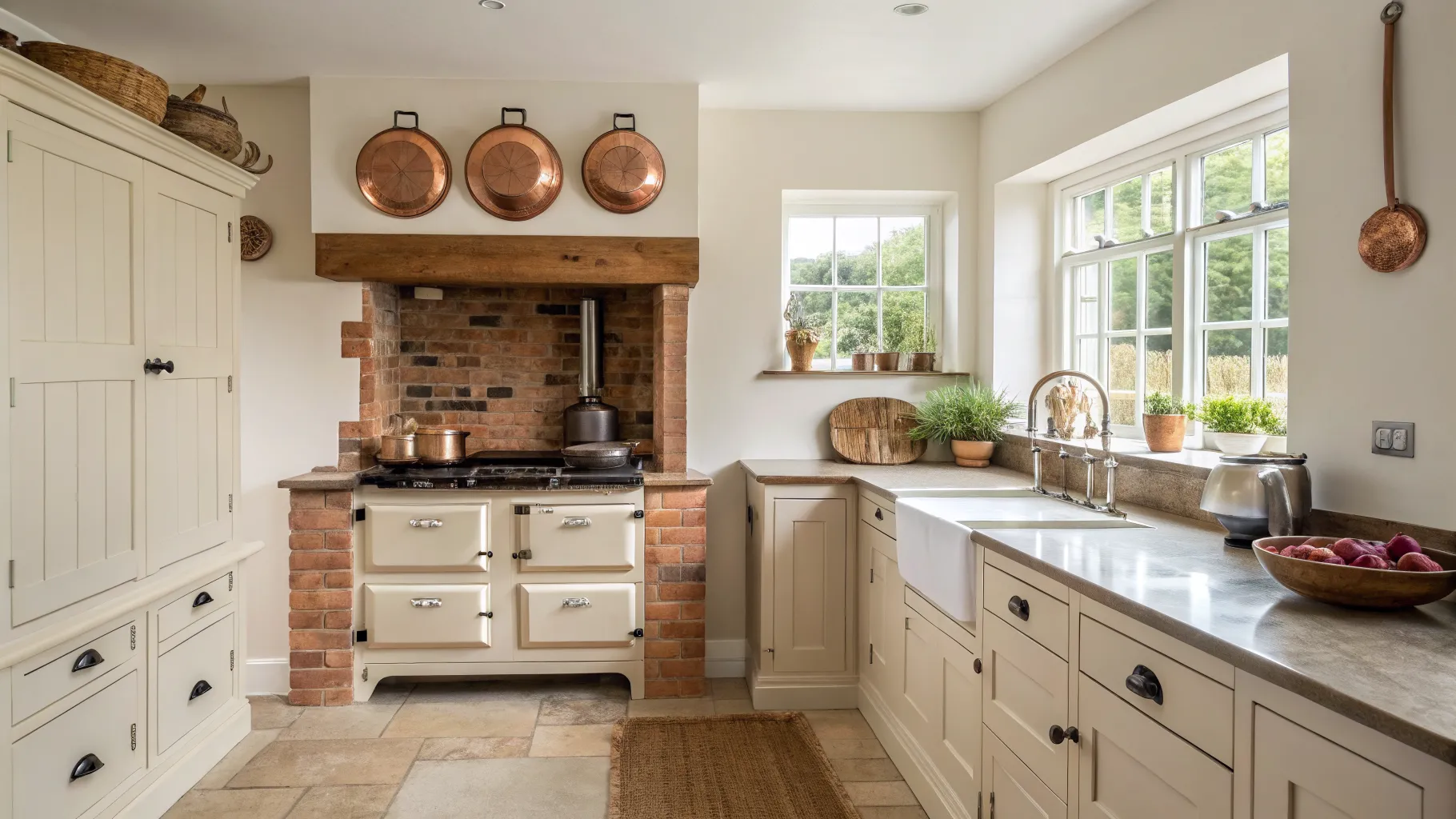
Two or three matching pendants in glass, brass or painted metal is the timeless choice for a country or shaker kitchen, and it pairs beautifully with a range cooker and a Belfast sink. Choose each pendant to be roughly one-third to one-half the width of the island so they feel substantial without dominating. Ribbed or opal glass softens the glare, while an aged brass or pewter finish suits an older home. This is the safest, most flattering option for the majority of kitchens.
Idea 2: A linear chandelier for a single clean statement
If a row of separate pendants feels fussy, a single linear light, one long fitting with several bulbs under a shared bar or frame, gives a cleaner, more architectural line. Size it to about two-thirds to three-quarters of the island length so it feels anchored to the piece below. Linear fittings suit longer islands and more contemporary or transitional kitchens, and they solve the spacing question in one purchase.
Idea 3: Spotlights for task and background light
Recessed ceiling spotlights or a discreet track can light an island evenly and unobtrusively, which works well in a busy family kitchen or where a low ceiling rules out hanging fittings. The catch is that spotlights alone can feel flat and clinical. The best results usually combine spots for general and task light with one or two pendants over the island for warmth and focus. Put the island lights on their own dimmable circuit so you can drop to a soft glow for evenings.
Idea 4: Layer it and put it on dimmers
The kitchens that photograph well almost always use layered lighting: ambient light for the room, task light over worktops and the island, and a little accent light for atmosphere. Wiring the island fittings to a separate dimmer is the cheapest upgrade you can make, letting the same lights do bright prep in the morning and a relaxed supper in the evening. Warm white bulbs (around 2700K) keep a country kitchen feeling cosy rather than cold. For the wider scheme across the whole room, plan the island lighting alongside your under-cabinet and ceiling lights rather than in isolation.
Matching the style to your kitchen
Let the rest of the kitchen lead. Painted metal and glass pendants suit a shaker or in-frame kitchen; industrial metal shades work in a barn conversion or a darker scheme; and simple opal glass globes sit happily in a traditional cottage kitchen. Pick a metal finish that echoes your tap and cabinet handles so the island reads as part of the room, not an afterthought. Above all, choose fittings you can dust and re-lamp easily, because an island light gets more grease and more use than any other in the house.
Frequently asked questions
How many pendant lights should I have over a kitchen island? Match the number to the island length: one light up to 120cm, two from 120cm to 180cm, and three from 180cm to 240cm. Over 240cm, use three widely spaced or five smaller pendants. Odd numbers usually look most balanced, with two pendants the neat exception because they sit symmetrically.
How high should pendant lights hang above a kitchen island? The bottom of the shade should sit 75cm to 90cm above the worktop, with 80cm to 85cm the practical standard for most UK kitchens. Raise them slightly for higher ceilings so they stay in proportion, and keep them high enough to see across the room.
How far apart should island pendants be spaced? Aim for 60cm to 75cm centre to centre, kept equal across the island, with about 15cm or more between the island end and the outermost light. Mark positions with tape before wiring so the spacing looks even from the main doorway.
Are spotlights or pendants better for a kitchen island? Pendants give focused task light and a design focal point; spotlights give even, unobtrusive coverage. The best schemes combine both, spots for general light and one or two pendants over the island, all on a dimmer so you can adjust the mood.
What colour temperature bulb should I use over an island? Warm white, around 2700K, keeps a country kitchen feeling welcoming. Cooler bulbs can look clinical. Use dimmable LED bulbs so you can have bright light for prep and a softer glow for evenings.